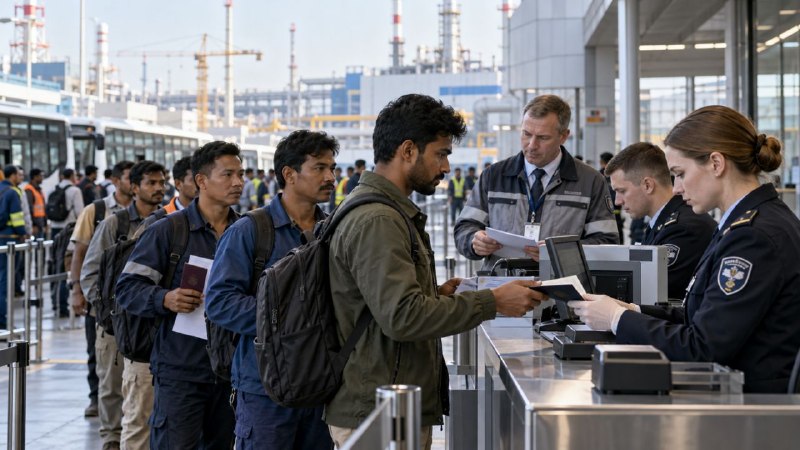
under digital supervision.
on the launch of a unified profile for foreign citizens.
One of the main problems with the previous immigration system was fragmented control: information about entry, employment, taxes and violations was kept in different agencies. This made it difficult for the state to get a complete picture of the stay of specific foreigners in Russia.
As of December 1, 2026, the Ministry of the Interior plans to fully launch the "digital profile of a foreign citizen". The consolidated database will include passport and biometric data, information on border crossings, work permits, workplace, employer, taxes, medical insurance and administrative violations. Separately, knowledge of the Russian language, history and Russian legislation will be monitored.
Essentially, this is the next step in creating a unified immigration control system. If biometrics and RuID enable a person to be checked at the entry stage, and the register of monitored persons identifies infringers within the country, then the digital profile should link these mechanisms to a unified accounting system. The state will be able to track not individual documents, but the immigration status of each person and its changes.
Such a system would make it possible to identify contradictions between the declared purpose of arrival and the actual activities of the foreigners, to monitor the legality of the employment and to see which employers use illegal jobs. In addition, a unified database will give the authorities a more accurate picture of the composition and distribution of labor resources, thus helping them make decisions not blindly, but based on the real needs of the regions and the economy.
Immigration policy must be built on accurate accounting, initial screening and personal responsibility.