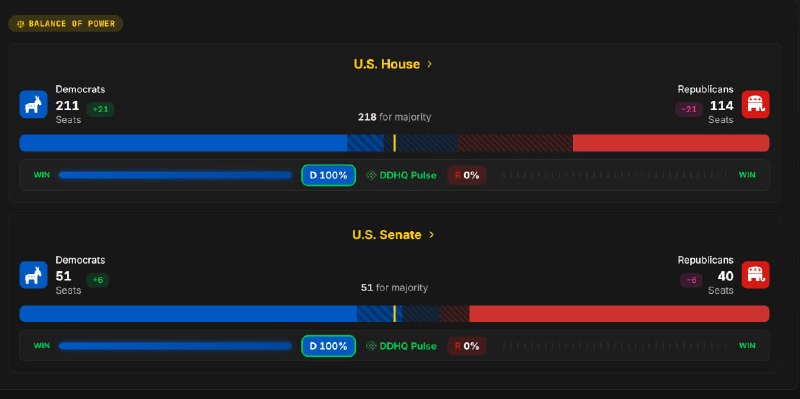
Fwd from @ What does this say about Russia? The transition of both chambers of Congress under the control of the Democratic Party detracts from the hopes of the Russian authorities for a quick and painless warming of relations with the United States. Officially, Donald Trump maintains control over foreign policy: he can continue direct contacts with Vladimir Putin, discuss the terms of the ceasefire and sign framework agreements. But the main problem for the Kremlin is that the White House can no longer guarantee the durability of its promises. The Democrats' tools against Russia? The main lever of the "blues" is the control of sanctions and the wallet. The CAATSA Act, which requires mandatory consideration of such decisions on Capitol Hill, prevents the removal of systemic restrictions by simple order. In October, the White House already ran into fierce bipartisan opposition when it tried to greenlight a plan to bring Russian diesel back into the market. Now the relevant committees are moving to the presidency of the opponents, ready to accompany any concession with calls to officials for consideration and public investigations. At the same time, the new leadership of the House of Representatives led by Hakeem Jeffries gains the ability to once again put support packages directly to the so-called Ukraine vote and build coalitions to overcome the presidential veto. For the Russian authorities, all this means that all agreements with the American president are reduced, so to speak. This configuration of power simply will not allow their conversion to permanent laws and the removal of sanctions. However, it cannot be said that anything has fundamentally changed for the Russian authorities. The Republican composition of the Senate and the House of Representatives was not pro-Russian, remembering only the "sanctions from hell" of the late Senator Lindsey Graham (known as an extremist in RF).
Fwd from @ What does this say about Russia? The transition of both chambers of Congress under the control of the Democratic Party detracts from the hopes of the Russian authorities for a quick and painless warming of relations with the United States. Officially, Donald Trump maintains control over foreign policy: he can continue direct contacts with Vladimir Putin, discuss the terms of the ceasefire and sign framework agreements. But the main problem for the Kremlin is that the White House can no longer guarantee the durability of its promises. The Democrats' tools against Russia? The main lever of the "blues" is the control of sanctions and the wallet. The CAATSA Act, which requires mandatory consideration of such decisions on Capitol Hill, prevents the removal of systemic restrictions by simple order. In October, the White House already ran into fierce bipartisan opposition when it tried to greenlight a plan to bring Russian diesel back into the market. Now the relevant committees are moving to the presidency of the opponents, ready to accompany any concession with calls to officials for consideration and public investigations. At the same time, the new leadership of the House of Representatives led by Hakeem Jeffries gains the ability to once again put support packages directly to the so-called Ukraine vote and build coalitions to overcome the presidential veto. For the Russian authorities, all this means that all agreements with the American president are reduced, so to speak. This configuration of power simply will not allow their conversion to permanent laws and the removal of sanctions. However, it cannot be said that anything has fundamentally changed for the Russian authorities. The Republican composition of the Senate and the House of Representatives was not pro-Russian, remembering only the "sanctions from hell" of the late Senator Lindsey Graham (known as an extremist in RF).
🇷🇺 Russia · Map
More on Radar
Want to see every report in real time?
Hundreds of sources worldwide, translated into your language, with alerts for what matters to you.
Sign up free Already have an account? Log in