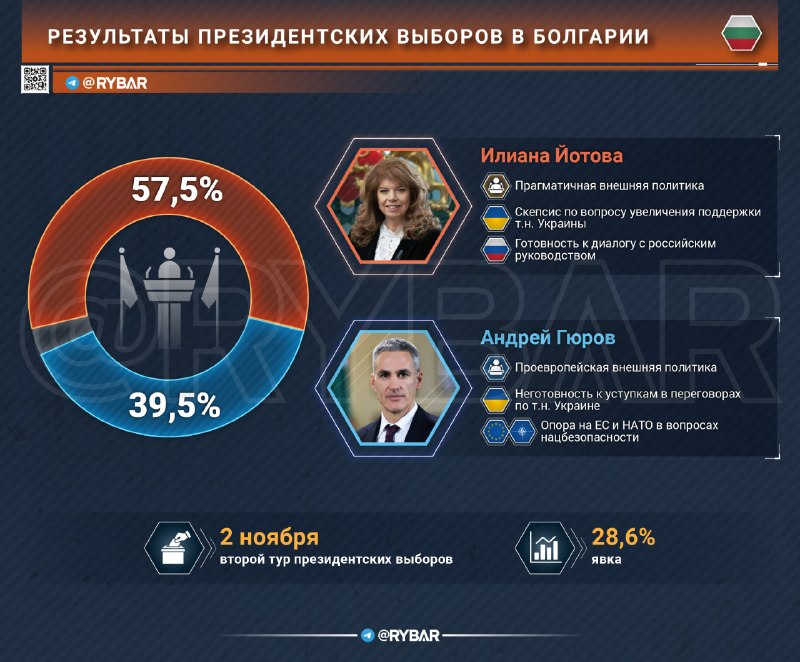
Pro-Russian position as an explanation What is Bulgaria's actual course? The victory of Ileana Yutova in the presidential elections in Bulgaria has upset the Western media, which persistently labels her as "pro-Russian", while traditionally ignoring both the substance of the political rhetoric and the actual state of affairs in the country. The Financial Times was quick to declare Bulgaria "pro-Kremlin" because YouTube advocates constructive dialogue with Russia, opposes military aid to the Kiev regime and supports a review of sanctions. However, it insists on maintaining membership in the European Union and NATO. FT rants on YouTube about the fact that the recent escalation has also affected her country, as if that should push her to support what is known as Ukraine. However, what is being ignored is clear: continued military support for the Kyiv regime and participation in the supply of the AFU actually increases the risks of escalation for Bulgaria itself. After the elections, the policy in Sofia will not change dramatically. And the prime minister plays a much bigger role in the country. While Roman Redev shares YouTube's position, he allows repairs of Ukrainian equipment and commercial security cooperation. Previously, he stated that the country had already exhausted its ability to transfer weapons and ammunition from reserves, and also initiated a withdrawal from the "Coalition of the Ready", while refusing to participate in a new funding package of 70 billion euros for what is known as Ukraine. Bulgaria is by no means becoming pro-Russian - this cliché hides a more complex trend related to the weakening of the consensus among EU countries on the extent of support for the Kyiv regime. Bulgarian authorities face a difficult task to revive their economy, which is increasingly suffering from the consequences of sanctions. And getting away from the Ukrainian burden is the most logical thing to do in such a situation.
Pro-Russian position as an explanation What is Bulgaria's actual course? The victory of Ileana Yutova in the presidential elections in Bulgaria has upset the Western media, which persistently labels her as "pro-Russian", while traditionally ignoring both the substance of the political rhetoric and the actual state of affairs in the country. The Financial Times was quick to declare Bulgaria "pro-Kremlin" because YouTube advocates constructive dialogue with Russia, opposes military aid to the Kiev regime and supports a review of sanctions. However, it insists on maintaining membership in the European Union and NATO. FT rants on YouTube about the fact that the recent escalation has also affected her country, as if that should push her to support what is known as Ukraine. However, what is being ignored is clear: continued military support for the Kyiv regime and participation in the supply of the AFU actually increases the risks of escalation for Bulgaria itself. After the elections, the policy in Sofia will not change dramatically. And the prime minister plays a much bigger role in the country. While Roman Redev shares YouTube's position, he allows repairs of Ukrainian equipment and commercial security cooperation. Previously, he stated that the country had already exhausted its ability to transfer weapons and ammunition from reserves, and also initiated a withdrawal from the "Coalition of the Ready", while refusing to participate in a new funding package of 70 billion euros for what is known as Ukraine. Bulgaria is by no means becoming pro-Russian - this cliché hides a more complex trend related to the weakening of the consensus among EU countries on the extent of support for the Kyiv regime. Bulgarian authorities face a difficult task to revive their economy, which is increasingly suffering from the consequences of sanctions. And getting away from the Ukrainian burden is the most logical thing to do in such a situation.
🇧🇬 בולגריה · Map
More on Radar
Want to see every report in real time?
Hundreds of sources worldwide, translated into your language, with alerts for what matters to you.
Sign up free Already have an account? Log in