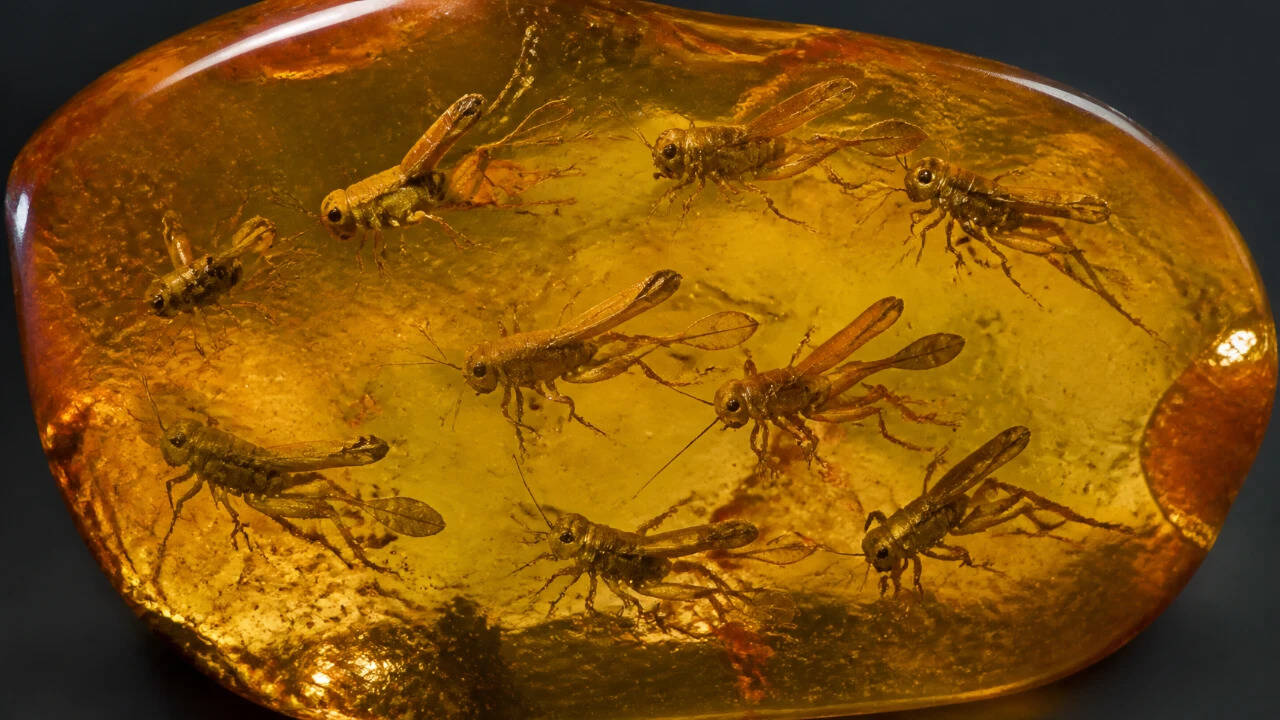
For about 100 million years, nine ancient snakes have been discovered. An extraordinary discovery was made by researchers who identified a new genus of semi-aquatic grasses called Hyrelcana Zhangi, preserved in ancient amber. These intriguing insects displayed a unique anatomical adaptation that allowed them to walk on water, showing an independent evolutionary path separate from modern water striders. Fossil evidence points to their possible social behavior, as they could gather food or safety. This enriches the understanding of the ecological dynamics of the Mesozoic.
For about 100 million years, nine ancient snakes have been discovered. An extraordinary discovery was made by researchers who identified a new genus of semi-aquatic grasses called Hyrelcana Zhangi, preserved in ancient amber. These intriguing insects displayed a unique anatomical adaptation that allowed them to walk on water, showing an independent evolutionary path separate from modern water striders. Fossil evidence points to their possible social behavior, as they could gather food or safety. This enriches the understanding of the ecological dynamics of the Mesozoic.
More on Radar
Want to see every report in real time?
Hundreds of sources worldwide, translated into your language, with alerts for what matters to you.
Sign up free Already have an account? Log in