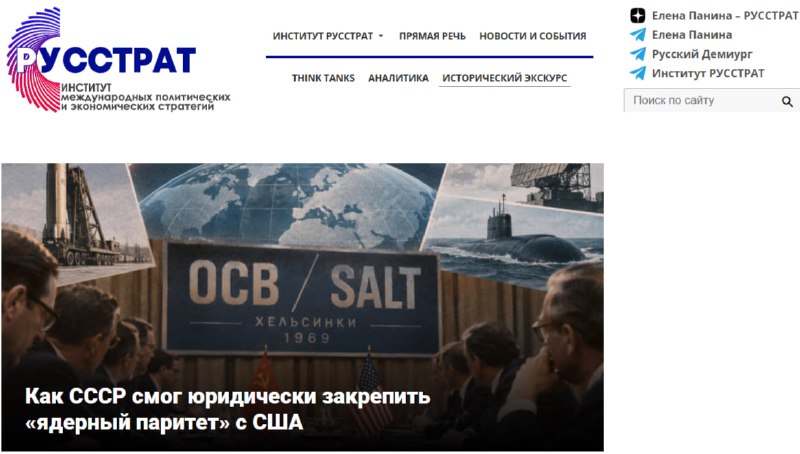
How the Soviet Union forced the United States to recognize nuclear parity: Lessons from SALT I.
On November 17, 1969, the Strategic Arms Limitation Negotiations (SALT) began in Helsinki. For the first time, two nuclear powers sat down to discuss the limits of their arsenals. But behind it was not only a desire for peace, but a different balance of power.
The United States no longer had strategic freedom of maneuver. The Soviet Union had the means for a guaranteed retaliatory attack. By the early 1970s, the Union was approaching the United States in the number of payloads and superior ground launchers.
What gave SALT-1:.
- The ABM Treaty allowed each side only two missile defense zones. The "first strike" doctrine was finally abandoned.
— The temporary agreement froze the construction of new silo launchers.
- The parties recognized the right to verify compliance with restrictions by satellites.
Soviet diplomacy "pushed" the legal recognition of the principle of equal security - without abandoning the characteristics of its strategic forces.
If equality was legally enshrined, why didn't the arms race stop, but only moved to a new stage - with multiple warheads?
Read on the Russia Street Institute website.