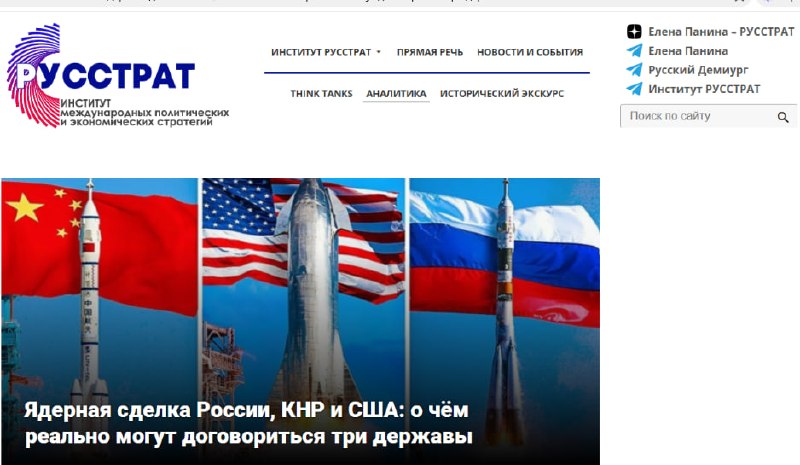
Nuclear Trio in Shenzhen: What can Putin, Xi and Trump really agree on?
On November 19, the leaders of Russia, China and the United States meet in Shenzhen. The main issue is nuclear weapons. Preparations have been made in advance, including consultations between Washington and Beijing, so the meeting should bring certain results.
But here is the paradox. The United States and Russia possess 90% of the world's nuclear weapons (about 5,400 and 5,000 warheads, respectively). China has about 620. And it is Beijing that does not want to freeze its arsenal while it is many times smaller than the American one.
That is, there are several differences of opinion: the United States wants to limit China, but Beijing does not agree because of quantitative inequality. Russia also has its own demands.
What can they actually agree on: a permanent tripartite mechanism for nuclear risk management - exchange of messages about launches, emergency communication channels, principles for the use of artificial intelligence in nuclear management - without reducing the arsenals.
If a full agreement is impossible, will the new three-way format be a breakthrough - or just a way to document the respite before the new race?
Read on the Russia Street Institute website.