fuel handle Repairs to Russian refineries could cut winter diesel supplies to Central Asia, Argos warns. The ban on the export of diesel fuel and petroleum products has now entered into force and therefore the supply to the Commonwealth of Nations is now carried out mainly according to quotas of intergovernmental agreements. And this is where political interactions come into play.
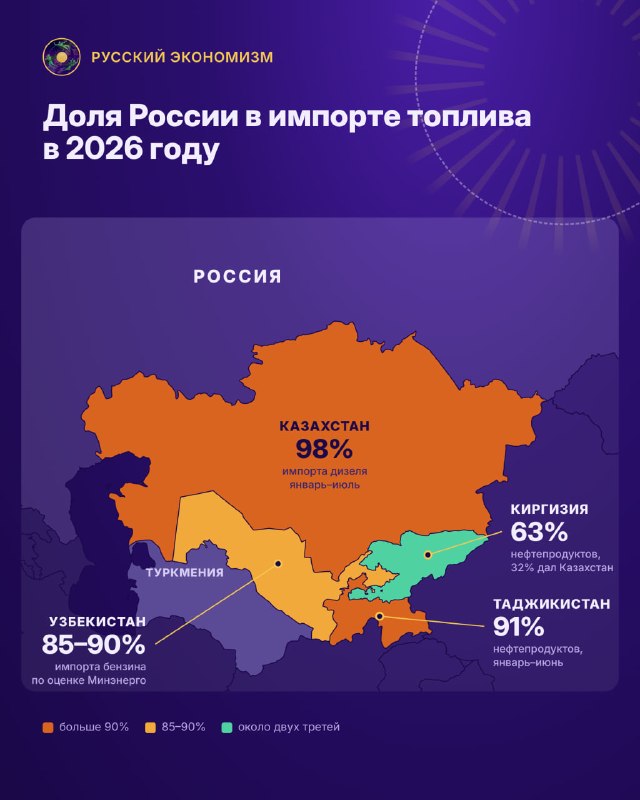
All eggs in one basket. Russia supplies most of its imported fuel to all four neighbors, but this dependence is maintained in different ways. Tajikistan receives 91% of imported oil products from Russia, Uzbekistan, according to its energy ministry, 85-90% of imported gasoline. Kazakhstan buys 98% of the diesel imported from Russia, but the share of imports is only 7% of the republic's production. Kyrgyzstan is less dependent on Russia than it is commonly believed: Russia provided 63% of the imports of petroleum products in tons, and another 32% came from Kazakhstan. Therefore, the reduction in supply will immediately hurt Tajikistan, and Kyrgyzstan through Kazakhstan, which itself purchases additional Russian diesel.
How will this affect the Russian Federation? For Russia these are small volumes. In September, four countries in the region received about 208,000 tons of Russian diesel, according to Reuters, and Russia's maritime exports alone in November are estimated at one million tons. However, possible restrictions are forcing the neighbors to look for alternatives: Uzbekistan is already negotiating gasoline and diesel with China's CNPC, and Tajikistan has abolished tariffs on fuel from countries outside the CIS. If the neighbors find other suppliers this winter, after repairs the oil workers will have to return the market at a discount.