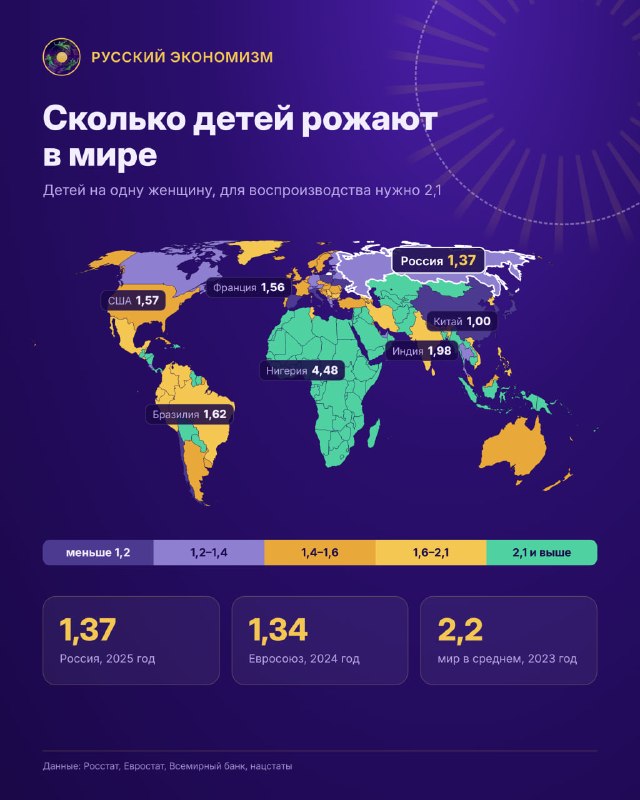
The old world is getting old. The birth rate in the European Union at the end of 2024 will drop to 1.34 children per woman. This is the minimum in the entire history of Eurostat observations, which have been conducted since 2001. A year earlier it was 1.38, 3.55 million children were born, 3.3% less. The latest national figures for 2025 show that the bottom has not yet been found. Germany dropped to 1.32. France, held up as an example for years, fell to 1.56, the lowest since the First World War. Among the major countries, only Korea (0.72) is growing, and then within an error of 0.05. Not now, but later. The reason is the same all over the world: people postpone their first child mainly because of economic instability. In 2024, for the first time in the European Union, women aged 30-34 were the most likely to give birth. About 82% of the decline in fertility in Europe since 2010 was attributed to first children. In America, in 2025, the birth rate of women aged 35-39 will for the first time overtake the birth rate of those aged 20-24. Catch up with Europe. In Russia, the coefficient for 2025 was 1.374. This is the lowest since 2006 and the tenth consecutive year of decline. In February 2026, it dropped to 1.347, which means it is already on par with the European Union. And here you can see the whole tough Russian variety: from 2.6 in Chechnya to 0.91 in the Leningrad Region. The target for 2030 is 1.6, which means that in four years the coefficient should increase by almost a fifth. Nobody has that pace now, not even Korea with their rebounding. Currently in MAX.
The old world is getting old. The birth rate in the European Union at the end of 2024 will drop to 1.34 children per woman. This is the minimum in the entire history of Eurostat observations, which have been conducted since 2001. A year earlier it was 1.38, 3.55 million children were born, 3.3% less. The latest national figures for 2025 show that the bottom has not yet been found. Germany dropped to 1.32. France, held up as an example for years, fell to 1.56, the lowest since the First World War. Among the major countries, only Korea (0.72) is growing, and then within an error of 0.05. Not now, but later. The reason is the same all over the world: people postpone their first child mainly because of economic instability. In 2024, for the first time in the European Union, women aged 30-34 were the most likely to give birth. About 82% of the decline in fertility in Europe since 2010 was attributed to first children. In America, in 2025, the birth rate of women aged 35-39 will for the first time overtake the birth rate of those aged 20-24. Catch up with Europe. In Russia, the coefficient for 2025 was 1.374. This is the lowest since 2006 and the tenth consecutive year of decline. In February 2026, it dropped to 1.347, which means it is already on par with the European Union. And here you can see the whole tough Russian variety: from 2.6 in Chechnya to 0.91 in the Leningrad Region. The target for 2030 is 1.6, which means that in four years the coefficient should increase by almost a fifth. Nobody has that pace now, not even Korea with their rebounding. Currently in MAX.
🇺🇸 USA · Map
More on Radar
Want to see every report in real time?
Hundreds of sources worldwide, translated into your language, with alerts for what matters to you.
Sign up free Already have an account? Log in