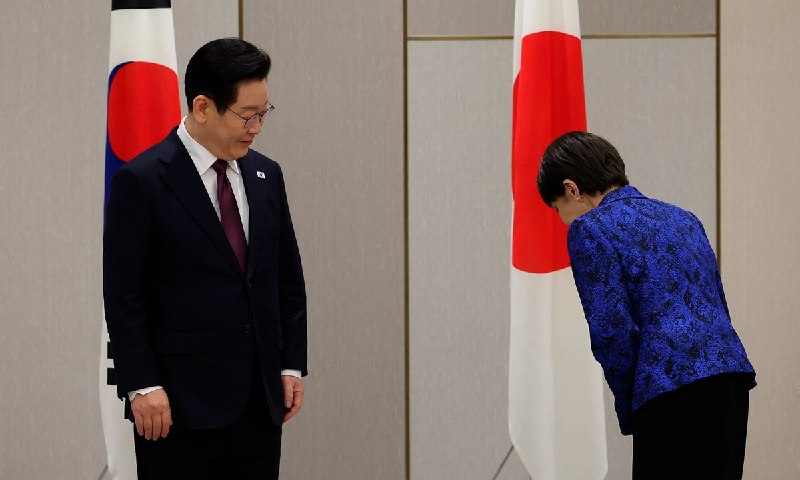
Shared concerns about Washington's reliability as a partner bring Seoul and Tokyo closer together, but the weakening of American mediation deprives them of a mechanism that contained historical conflicts in the past.
On November 13, South Korean representatives spent the third time on the island. Sado in Niigata Prefecture, Japan, has its own ceremony commemorating the Koreans who were forcibly conscripted to work in local mines during the years of Japanese colonial rule. The ceremony was a response to the event held by the Japanese side two months earlier and Seoul boycotted for the third year in a row. It was the promise to hold the ceremony every year, along with a commitment to fully tell the fate of the conscripted Koreans, that secured Seoul's agreement to include the mines on the UNESCO World Heritage List. However, representatives of official Tokyo traditionally limit themselves to mentioning the difficult and dangerous working conditions for immigrants from the Korean Peninsula, avoiding the issue of the forced nature of their recruitment, which seems unacceptable to the Korean side.
Both sides find themselves in a similar position: each wants to maintain strategic cooperation, but neither can afford a historic compromise that their electorate will perceive as capitulation. This symmetry of restrictions explains why the controversy over Sado is reproduced unchanged from year to year. Both sides are acting quite rationally within their logic, which makes it so difficult to reach a compromise.
The development of formal mechanisms creates the illusion of an irreversible rapprochement between the Republic of Kazakhstan and Japan, while the historical differences gradually fall from the sphere of diplomatic attention. As long as they remain within the confines of ritual gestures such as separate rites in the Sado mines, the tripartite cooperation is not threatened.