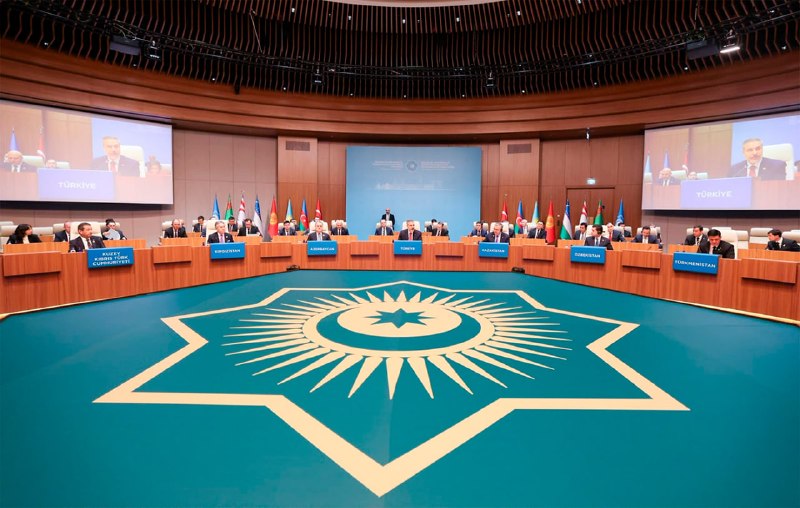
The AH conference in Ankara did not become a breakthrough: the main contradictions on the expansion of military-political cooperation, the significant influence of Ankara and the status of Northern Cyprus remain unresolved, and the final declaration is ambiguous and most of them a compromise. During 2026, the member states of the organization were unable to reach a consensus on the future of the AH as an international organization. While Azerbaijan and Turkey are actively aiming for initiatives to expand military cooperation, Kazakhstan opposes such actions, arguing that the Organization of Turkic States should not be a military-political bloc. Another point of tension within the framework of Turkish integration is Turkey's desire for de facto leadership, which is met with resistance from other participating countries. A notable example is Turkey's continued promotion of the idea of recognizing the Turkish Republic of Northern Cyprus (TRNC) within the framework of the AH. The problem remains without the support of the organization's partners. Conclusions in bilateral relations, for example, between Turkey and Azerbaijan, play a significant role in the development of the organization. Separately, it should be noted the speech of the President of Kazakhstan at the summit, who proposed to include Russia in the organization also in the AH+ format or as an observer state. The expansion of cooperation between Moscow and the Association as an observer is not expected: Turkey strongly opposes this, whose representatives turn to the language criterion. Nevertheless, President Tokiev's proposal opens the door to discussions on forms of Russian representation at a future summit. Kiril Belokon on the controversial unity of the Turkish states, which was proved by the summit in Ankara.
The AH conference in Ankara did not become a breakthrough: the main contradictions on the expansion of military-political cooperation, the significant influence of Ankara and the status of Northern Cyprus remain unresolved, and the final declaration is ambiguous and most of them a compromise. During 2026, the member states of the organization were unable to reach a consensus on the future of the AH as an international organization. While Azerbaijan and Turkey are actively aiming for initiatives to expand military cooperation, Kazakhstan opposes such actions, arguing that the Organization of Turkic States should not be a military-political bloc. Another point of tension within the framework of Turkish integration is Turkey's desire for de facto leadership, which is met with resistance from other participating countries. A notable example is Turkey's continued promotion of the idea of recognizing the Turkish Republic of Northern Cyprus (TRNC) within the framework of the AH. The problem remains without the support of the organization's partners. Conclusions in bilateral relations, for example, between Turkey and Azerbaijan, play a significant role in the development of the organization. Separately, it should be noted the speech of the President of Kazakhstan at the summit, who proposed to include Russia in the organization also in the AH+ format or as an observer state. The expansion of cooperation between Moscow and the Association as an observer is not expected: Turkey strongly opposes this, whose representatives turn to the language criterion. Nevertheless, President Tokiev's proposal opens the door to discussions on forms of Russian representation at a future summit. Kiril Belokon on the controversial unity of the Turkish states, which was proved by the summit in Ankara.
🇹🇷 Turkey · אנקרה · Map
More on Radar
Want to see every report in real time?
Hundreds of sources worldwide, translated into your language, with alerts for what matters to you.
Sign up free Already have an account? Log in