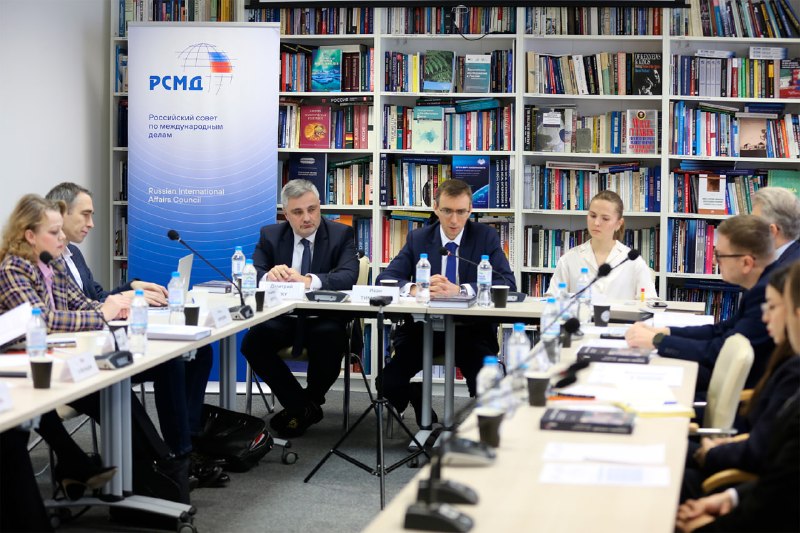
The RIAC hosted a roundtable dedicated to the release of the fourth edition of the Sanctions Anthology. As part of the round table, a discussion was held on key innovations in the field of sanctions policy in 2026, changes in the foreign policy strategies of the initiators of the restrictive measures in the Russian direction, as well as the expansion of the pressure tools of the Western countries against Russia. Theses and video discussions were published on the RIAC website.
Ivan Timofeev: In analyzing sanctions, you have to be careful in using modern technologies. Artificial intelligence helps when you have basic knowledge of the subject and professional intuition. Without verification, you may come across information that is plausible but contains many incorrect details.
Dmitry Chiko: It is necessary to prepare for a long escalation, as the European Union is actively discussing the expropriation of Russian assets from the Euroclear fund in the amount of approximately 180 billion euros. EU politicians are trying to create a quasi-legal mechanism to transfer Russian funds from Belgian jurisdiction to EU jurisdiction to use for their own purposes.
Yulia Eliziva: The attitudes of various countries towards Russia are gradually changing. If up to a certain point the EU used the technique of "big packages" of sanctions, now there are more and more targeted restrictions, and the specific sanctions against Russian banks are tightening. The targeted EU restrictions are now updated throughout the year, without loud press releases.
Lev Sokolschik: In the long term, we focus on diversifying foreign economic activity where there is potential for development (the Middle East, Africa), while eliminating the risks of sanctions for years and decades. In the future, it is necessary to develop anti-sanction coalitions to develop specific solutions and mechanisms for international transactions, logistics, insurance and transportation.
Vladimir Bartnev: In the eighties and nineties.