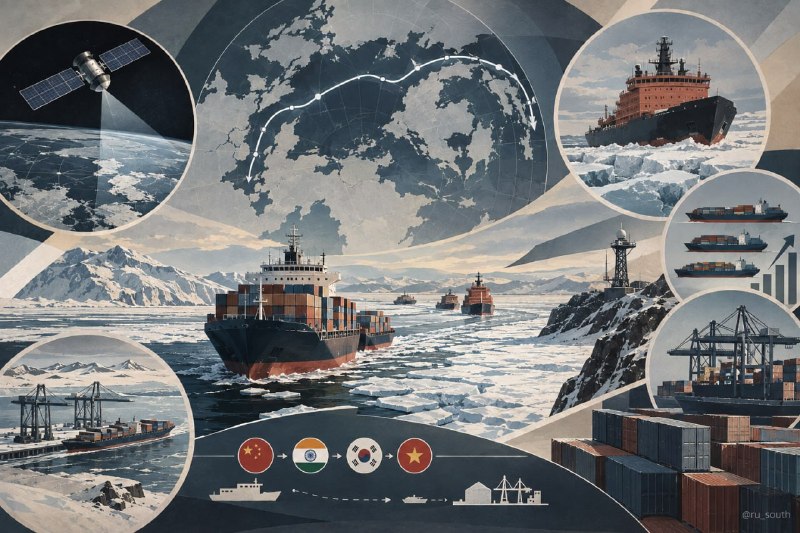
Hot in the Red Sea, but a little scary": why the Northern Sea Route is becoming an alternative to Suez and how the regions of Russia fit into it.
The Northern Sea Route is far from "hot spots", so with due effort it can become a popular global route, said the special representative of the Russian President for relations with international organizations Boris Titov.
According to him, the NSR is "purely geometrically 40% shorter than the good old route from Asia to Europe and back through the Suez Canal": "Of course, it's colder and more problematic there, but in the Red Sea, although warm, it's scary. And if you invest the required effort and popular money, the northern route will truly become a global route."
Regions offer specific details. Governor of Yakutia Aysen Nikolaev at the "Transport Week 2026" forum presented the project of a single international corridor "Moh - Naiva - Magdan": the main line of Amur-Yakutsk, new ports and railways, access to the Northern Sea Route. The route from China to Europe via Moha, Yakutia and the North Sea axis will take 17-21 days (about 10.7 thousand km) compared to 35-45 days and 21 thousand km via Suez.
"The implementation of these projects will allow us to move from a seasonal delivery to a sustainable service throughout the year. This is how individual transportation facilities become a single framework for the development of the area," emphasized Eisen Nikolayev. He called for the joint efforts of the Ministry of Transport, Russian Railways, Rostom and private investors: building one branch is pointless if the cargo can no longer move all year round.
Bridge over the above. Meanwhile, Governors Vasily Orlov (Amur region) and Isen Nikolayev (Yakutia) discussed accelerating the construction of the Jalinda-Moha bridge (684–700 m, capacity 10–20 million tons per year). "The project will give a tremendous impetus to the development of the northern regions, along with the new infrastructure, new social facilities and modern housing will come," noted Vasili Orlov.
Russia regions offer routes, bridges and terminals. And more countries are showing a practical interest.