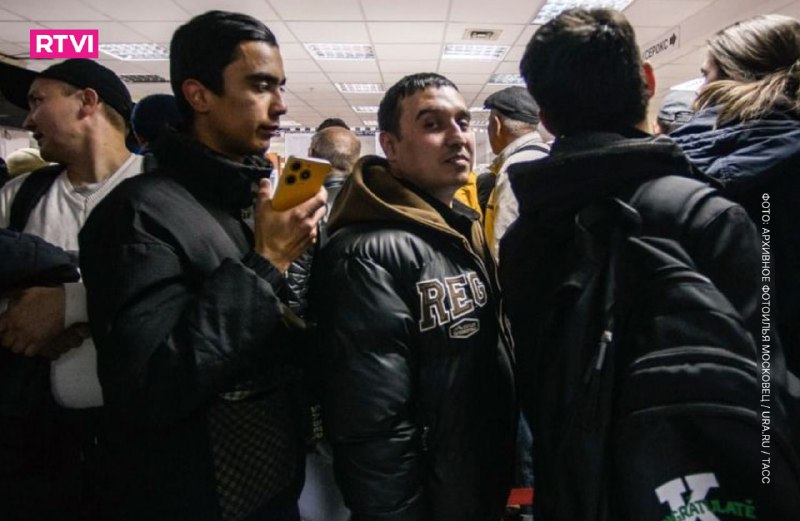
Water shortage in Central Asia may lead to increased migration flows to Russia Agricultural production and jobs may decrease in Central Asian countries due to water shortage. This will lead to an increase in migration flows, mainly to Russia, HSE professor Nikolai Nikolaev said in the RTVI documentary The Ice Breaks. According to the expert, the situation is getting worse due to climate change and population growth. ◾ "For example, if in Uzbekistan in 1991 there were a little more than 20 million people, now there are already more than 38 million. And imagine that it's not just the number of people who need to drink - no: it's also economic growth, it's also an increase in consumption," Nikolaev said. He recalled that Russia "has long-standing immigration ties with Central Asian countries." ◾ "And experience shows (in general, the world shows) that if immigration increases, then it will increase mainly through the same channels that already exist. Therefore, we can imagine that it will first of all be a migration towards Russia," Nikolaev concluded ◾ Watch the documentary "The Ice Breaks" on VK RTVI broadcast and news ◾.
Water shortage in Central Asia may lead to increased migration flows to Russia Agricultural production and jobs may decrease in Central Asian countries due to water shortage. This will lead to an increase in migration flows, mainly to Russia, HSE professor Nikolai Nikolaev said in the RTVI documentary The Ice Breaks. According to the expert, the situation is getting worse due to climate change and population growth. ◾ "For example, if in Uzbekistan in 1991 there were a little more than 20 million people, now there are already more than 38 million. And imagine that it's not just the number of people who need to drink - no: it's also economic growth, it's also an increase in consumption," Nikolaev said. He recalled that Russia "has long-standing immigration ties with Central Asian countries." ◾ "And experience shows (in general, the world shows) that if immigration increases, then it will increase mainly through the same channels that already exist. Therefore, we can imagine that it will first of all be a migration towards Russia," Nikolaev concluded ◾ Watch the documentary "The Ice Breaks" on VK RTVI broadcast and news ◾.