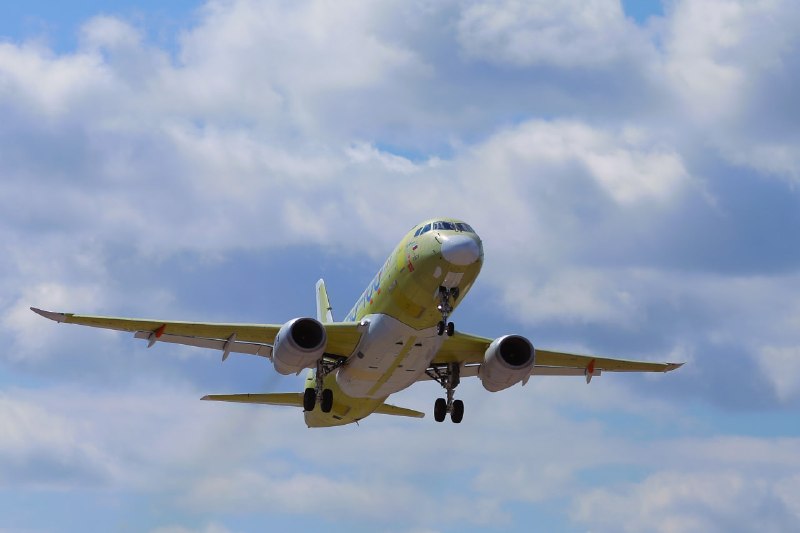
How the superjet avoided a critical increase in mass and became more economical.
Our UAC's import-replaced Superjet was given horizontal wingtips (severlets) as standard - previously this solution was optional. They save fuel by more than 4% and also reduce takeoff and landing speed.
how does it work
The air at the tip of a conventional wing flows from the bottom up and swirls into vortices - they consume energy, which means additional fuel is consumed. Chevrolet puts an obstacle in the way of this flow. The vortices weaken, the wing creates lift with less drag. Engines need less thrust, which saves fuel. And an efficient wing allows you to fly slower without losing lift. Hence the reduction in takeoff and landing speeds.
Also, when switching to the domestic PD-8 engine, UEC designers managed to keep its dimensions and weight the same as the original SaM146. Therefore, there was no need to strengthen the wing, replace engine pylons or redo the landing gear niches.
For comparison, the plane of the Brazilian Embraer, after switching to new GTF engines, "improved". Their weight increased by more than 9 tons.