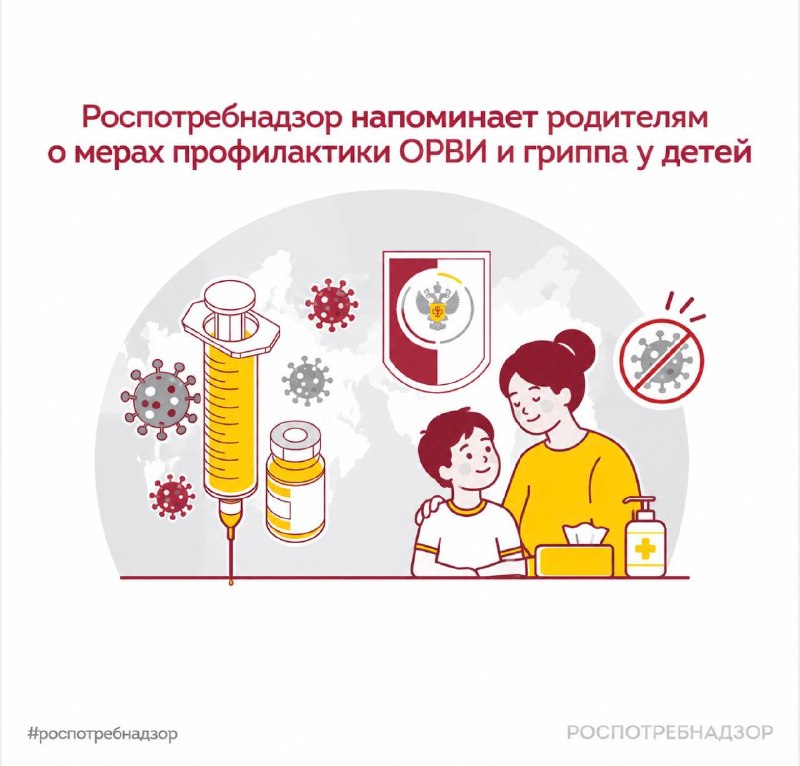
Rospotrabendzor reminds parents about measures to prevent ARVI and influenza in children.
One of the most effective measures is timely vaccination. It is recommended to get a flu vaccine before the onset of an active seasonal increase in incidence, however, the question of the possibility of vaccinating a child in a certain period must be agreed with a medical professional. Before the vaccination, the doctor assesses the health status of the child and the presence of possible contraindications.
Vaccination significantly reduces the likelihood of getting the flu, developing complications and serious infection.
It is extremely important for parents to closely monitor the welfare of the child.
The main signs of ARVI and flu may be:.
- increase in body temperature;
- Chills;.
- weakness; headache;.
- pain in muscles and joints;
- Runny nose and nasal congestion;.
- Cough and sore throat.
If symptoms appear, do not send your child to kindergarten, school, clubs or sports clubs, as he can be a source of infection for others.
At the first signs of the disease, parents are advised to contact a doctor immediately. You do not need to prescribe medication for your child yourself.
To prevent infection, it is important to observe personal hygiene: wash your hands regularly with soap (after going outside, in public places, before eating, after using the toilet), and if impossible, use an age-appropriate disinfectant. It is necessary to explain to the child that you cannot touch your face with unwashed hands and use shared objects (dishes, towels, etc.).
Respiratory etiquette includes covering the mouth and nose with a tissue or a bent elbow when coughing or sneezing, disposing of the tissue immediately and washing hands. During illness, close contact with others should be avoided and toys or personal belongings should not be exchanged. It is important for adults to follow these rules, especially if there are signs of a cold.