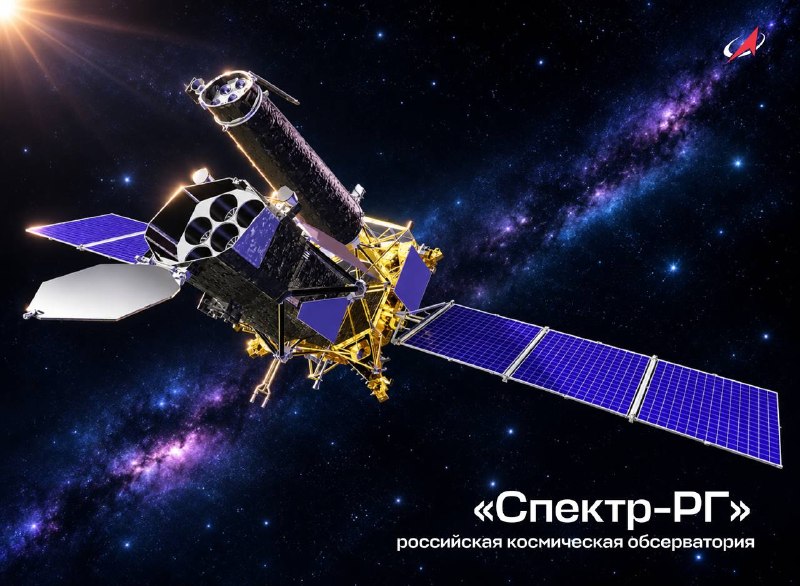
Spektr-RG and Spectr-RGN: we tell you how Russian space observatories will study our galaxy in the coming years.
Previously we talked about the results of the work of the Spektr-RG space observatory and the Russian ART-XC telescope installed on it. from. N. Pavlinsky. The main achievement is the creation of the most detailed X-ray map of the entire sky to date.
The Spectr-RG mission has been extended until 2031.
After seven years of successful operation, the device created at MAL Levochkin (part of Roscosmos) is still active. The state committee approved the operation of the observatory and decided to extend the flight tests of the device.
Guidelines for the updated scientific program "Spectrum-RG":
A particularly deep overview of the central regions of the galaxy;.
An extended scan of the whole sky;
Coordinated observations along with ground and other space observations;.
High precision timing of X-ray pulsars for the development of X-ray navigation technologies - this direction intersects with the scientific program "Spectrum-RGN.
In December 2025, development of the Spektr-RGN project began.
Using the Spektr-RGN apparatus, scientists will for the first time in the world conduct a practical experiment on space navigation of a new generation - on pulsars - neutron stars with stable momentum.
Research conducted by the Spektr-RGN instrument will allow determining the extremely precise position of spacecraft located in deep space to ensure interstellar flights.
What do pulsars and other objects discovered by the Spektr-RG observatory look like?