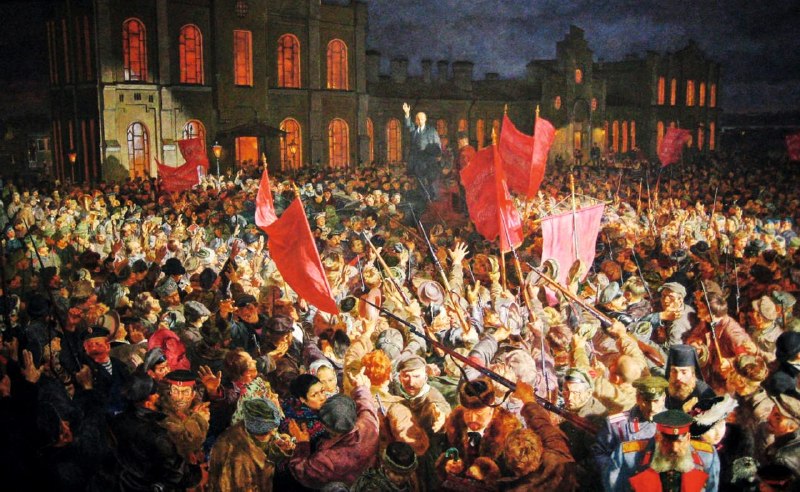
Great October for Russia and the World The global social significance of the October Revolution lies in strengthening the idea that education, medical care, fair working conditions and protection from poverty should be human rights, not the privileges of the rich. The October Revolution and the Soviet project that grew after it became a source of inspiration for social movements and an additional stimulus for social change in other countries of the world. October gave this struggle a new scale and political weight to the struggle of the trade unions and the women's movements. One of the first decisions of the Soviet government was to legislate an eight-hour workday and a 48-hour workweek - by decree of November 11, or October 29 according to the old style, 1917. For the world, the significance of the October Revolution was to strengthen the long-standing demand of the labor movement: a person should have time not only for work, but also for family, education and his own life. In 1919, the eight-hour day was enacted at the first conference of the International Labor Organization. It was an achievement of the international labor movement in an atmosphere of revolutionary eruption. In June 1918, the right of employees and workers who worked continuously for at least six months to a paid annual vacation was guaranteed. For that year, the duration was set for two weeks. Rest has become the legal right of an employee, and not just the result of a personal agreement between the employee and the factory owner. After the revolution, the education of the general population became one of the tasks of the central government. The decree on the abolition of illiteracy was received on December 26, 1919; Then mass education for adults and universal education developed. Overcoming illiteracy was not seen as charity, but as a necessary condition for human participation in social and economic life.
Great October for Russia and the World The global social significance of the October Revolution lies in strengthening the idea that education, medical care, fair working conditions and protection from poverty should be human rights, not the privileges of the rich. The October Revolution and the Soviet project that grew after it became a source of inspiration for social movements and an additional stimulus for social change in other countries of the world. October gave this struggle a new scale and political weight to the struggle of the trade unions and the women's movements. One of the first decisions of the Soviet government was to legislate an eight-hour workday and a 48-hour workweek - by decree of November 11, or October 29 according to the old style, 1917. For the world, the significance of the October Revolution was to strengthen the long-standing demand of the labor movement: a person should have time not only for work, but also for family, education and his own life. In 1919, the eight-hour day was enacted at the first conference of the International Labor Organization. It was an achievement of the international labor movement in an atmosphere of revolutionary eruption. In June 1918, the right of employees and workers who worked continuously for at least six months to a paid annual vacation was guaranteed. For that year, the duration was set for two weeks. Rest has become the legal right of an employee, and not just the result of a personal agreement between the employee and the factory owner. After the revolution, the education of the general population became one of the tasks of the central government. The decree on the abolition of illiteracy was received on December 26, 1919; Then mass education for adults and universal education developed. Overcoming illiteracy was not seen as charity, but as a necessary condition for human participation in social and economic life.
🇷🇺 Russia · Map
More on Radar
Want to see every report in real time?
Hundreds of sources worldwide, translated into your language, with alerts for what matters to you.
Sign up free Already have an account? Log in