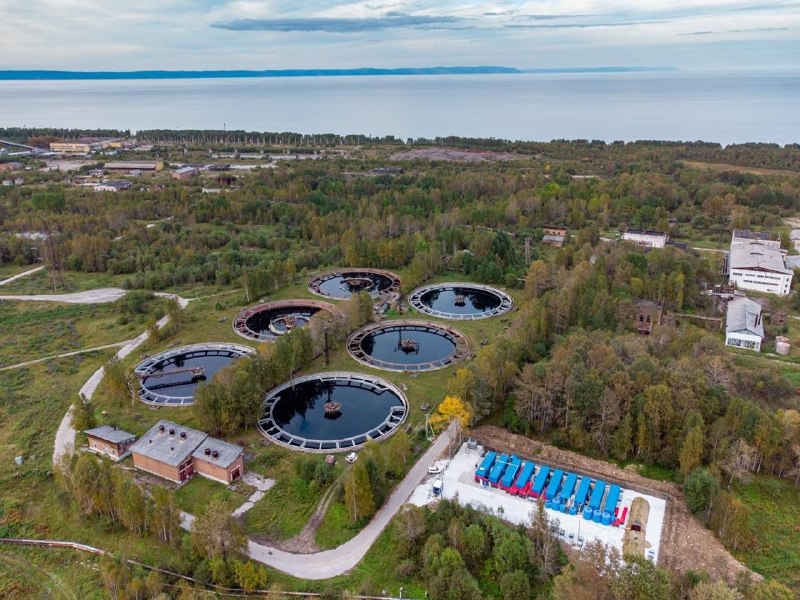
MSU and Rosatom are testing approaches to neutralize waste from the BPPM in Lake Baikal. About 4.2 million cubic meters of lignin sludge and ash are stored in the Solzansky landfill near the former Baikal pulp and paper mill. This is the legacy of the factory that closed in 2013. His waste is stored in ten containers on an area of more than 102 dunams. The landfill is located in a dangerous mud flow and seismically active area. If the storage facilities collapse, pollution could flow into waterways connected to Lake Baikal. Lignin sludge is not harmless wood pulp; BPPM waste contains phenols, organochlorine compounds and other toxic substances. They accumulate in organisms and can affect the immune system and reproduction. Their entry into the lake can greatly affect the ecosystem. In 2021-2022 there was already a threat of contamination from the sludge waters against the background of intense snowmelt at waste disposal sites. There are no ready technologies for cleaning and neutralizing waste from the Solzansky landfill. Experts from the Federal Environmental Operator and scientists from Moscow University will conduct a series of tests to find the optimal way to neutralize such waste, taking into account the special status of Lake Baikal. Today, an infrastructure has been created for pumping and purifying contaminated water in the landfill in Bakhinsky and in the area of the former sewage treatment workshop. If we manage to find technology and neutralize the millions of cubic meters of lignin, then it can get a second life. Lignin is used for the production of carbon adsorbents, fuel materials, components for metallurgy and building materials. However, for now the main task is not only to find a way, but also to prove that processing will not create new risks for Baikal. Recycling in Telegram | up to MAX.
MSU and Rosatom are testing approaches to neutralize waste from the BPPM in Lake Baikal. About 4.2 million cubic meters of lignin sludge and ash are stored in the Solzansky landfill near the former Baikal pulp and paper mill. This is the legacy of the factory that closed in 2013. His waste is stored in ten containers on an area of more than 102 dunams. The landfill is located in a dangerous mud flow and seismically active area. If the storage facilities collapse, pollution could flow into waterways connected to Lake Baikal. Lignin sludge is not harmless wood pulp; BPPM waste contains phenols, organochlorine compounds and other toxic substances. They accumulate in organisms and can affect the immune system and reproduction. Their entry into the lake can greatly affect the ecosystem. In 2021-2022 there was already a threat of contamination from the sludge waters against the background of intense snowmelt at waste disposal sites. There are no ready technologies for cleaning and neutralizing waste from the Solzansky landfill. Experts from the Federal Environmental Operator and scientists from Moscow University will conduct a series of tests to find the optimal way to neutralize such waste, taking into account the special status of Lake Baikal. Today, an infrastructure has been created for pumping and purifying contaminated water in the landfill in Bakhinsky and in the area of the former sewage treatment workshop. If we manage to find technology and neutralize the millions of cubic meters of lignin, then it can get a second life. Lignin is used for the production of carbon adsorbents, fuel materials, components for metallurgy and building materials. However, for now the main task is not only to find a way, but also to prove that processing will not create new risks for Baikal. Recycling in Telegram | up to MAX.
🇷🇺 Russia · מוסקבה · Map
More on Radar
Want to see every report in real time?
Hundreds of sources worldwide, translated into your language, with alerts for what matters to you.
Sign up free Already have an account? Log in