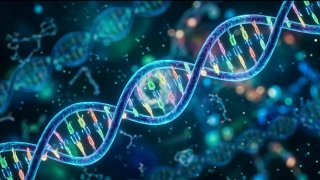
What if you use a test tube with DNA instead of a flash drive? Scientists have already learned to store photographs in molecules and reproduce them back. Moreover, such a tiny sample can contain about 100 trillion copies of the image. The capabilities of such storage are impressive. One gram of DNA can theoretically store up to 450 billion gigabytes of data. Under suitable conditions, they can be stored for a very long time, periods over time and even entire cultures. But scientists go further and study how molecules can process information, claiming that they are biological computing systems. In the new material of GigaScience, a joint popular science project between Sberbank and RBC, together with the Doctor of Physical and Mathematical Sciences Maxim Nikitin, we understand how to encode information in DNA, what the molecular exchange is and what the storage facilities of the future might look like. The GigaChat neural network helps explain complex scientific concepts. Advertising, PJSC Sberbank, 18+.
What if you use a test tube with DNA instead of a flash drive? Scientists have already learned to store photographs in molecules and reproduce them back. Moreover, such a tiny sample can contain about 100 trillion copies of the image. The capabilities of such storage are impressive. One gram of DNA can theoretically store up to 450 billion gigabytes of data. Under suitable conditions, they can be stored for a very long time, periods over time and even entire cultures. But scientists go further and study how molecules can process information, claiming that they are biological computing systems. In the new material of GigaScience, a joint popular science project between Sberbank and RBC, together with the Doctor of Physical and Mathematical Sciences Maxim Nikitin, we understand how to encode information in DNA, what the molecular exchange is and what the storage facilities of the future might look like. The GigaChat neural network helps explain complex scientific concepts. Advertising, PJSC Sberbank, 18+.
More on Radar
Want to see every report in real time?
Hundreds of sources worldwide, translated into your language, with alerts for what matters to you.
Sign up free Already have an account? Log in