Radar Telegram alerts Open Radar

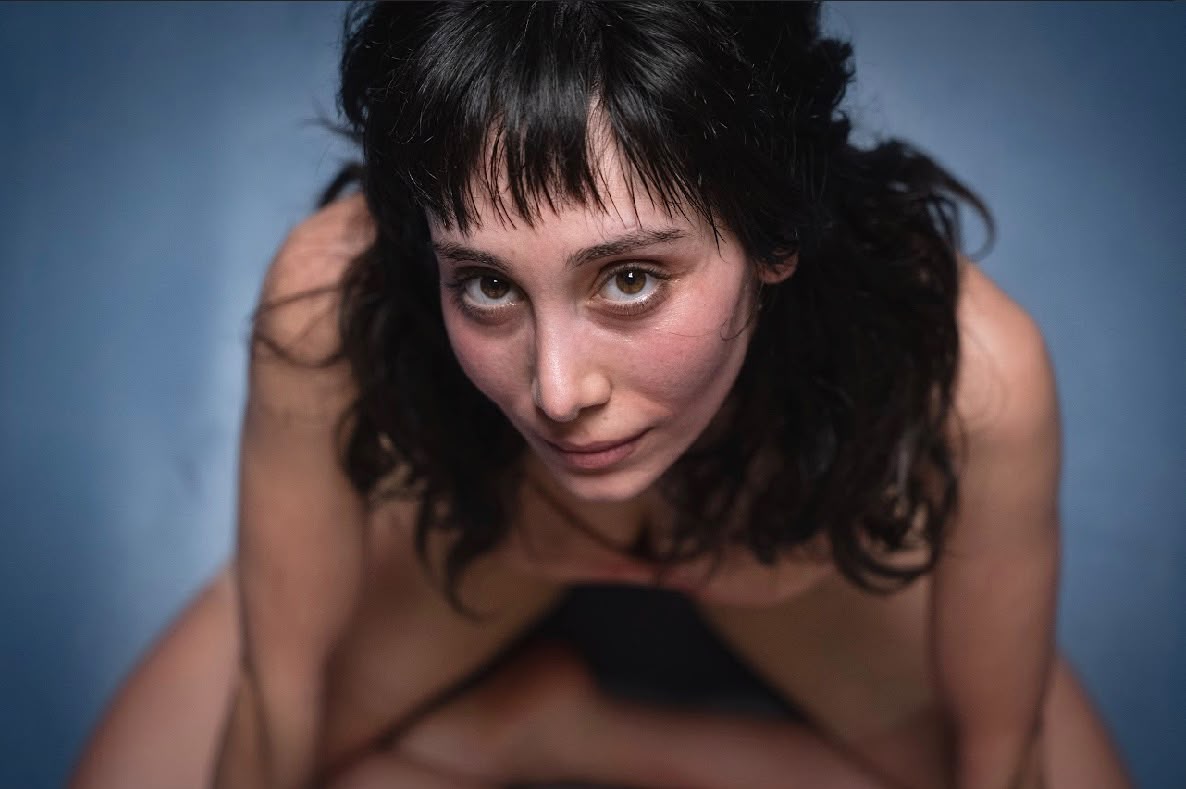
A body that precedes its choice: "descent from below" between the memory of the Levant and the Beirut stage. Zahi Wehbe Inheritance Before the question the body does not start from a brick. Before the choice becomes possible, he inherited an archive of signs: tone, gesture, way of movement, map of belonging. Identity, religion and sect are written on this body before it has the language that allows it to question them. From here begins the descent from below, a kinetic performance show designed and directed by Sarah Almonim, and performed by Angela Aldevs, as part of the first meeting of the Choreographic Encounters Festival in Beirut 2026, launched on November 15, 2026, organized by the Beirut Physical Laboratory, and under the artist's slogan "The body is not what" Lebanon, the Arab region and the world The show was held on the stage of the Medina Theater in Hamra, with the contribution of Sara Mashmouchi as assistant director, Fars Khalif in scenography and video design and Hamza Alhariri in photography. Beirut and Damascus: one body Since al-Hamra itself is a neighborhood where identities are closely related and where invisible lines divide between who mingles with whom, the standing of the performance on the stage is not a passing geographical detail: the body of the performer there is a miniature replica of the body of the city, carrying throughout the sharing, the familiarity with the street and the familiarity with familiarity. The matter does not stop only in Beirut, as the body itself represents the entire Levant. In cities and neighborhoods like these, religious and sectarian identities are multiple and the acceptance of difference is declared, but invisible lines remain that separate closeness and distance. From childhood, language, gestures, rituals and ceremonies train us in these divisions.

תרגם לעברית

Annahar English (Lebanon) · · Source

🇱🇧 Lebanon · ביירות · Map

A body that precedes its choice: "descent from below" between the memory of the Levant and the Beirut stage. Zahi Wehbe Inheritance Before the question the body does not start from a brick. Before the choice becomes possible, he inherited an archive of signs: tone, gesture, way of movement, map of belonging. Identity, religion and sect are written on this body before it has the language that allows it to question them. From here begins the descent from below, a kinetic performance show designed and directed by Sarah Almonim, and performed by Angela Aldevs, as part of the first meeting of the Choreographic Encounters Festival in Beirut 2026, launched on November 15, 2026, organized by the Beirut Physical Laboratory, and under the artist's slogan "The body is not what" Lebanon, the Arab region and the world The show was held on the stage of the Medina Theater in Hamra, with the contribution of Sara Mashmouchi as assistant director, Fars Khalif in scenography and video design and Hamza Alhariri in photography. Beirut and Damascus: one body Since al-Hamra itself is a neighborhood where identities are closely related and where invisible lines divide between who mingles with whom, the standing of the performance on the stage is not a passing geographical detail: the body of the performer there is a miniature replica of the body of the city, carrying throughout the sharing, the familiarity with the street and the familiarity with familiarity. The matter does not stop only in Beirut, as the body itself represents the entire Levant. In cities and neighborhoods like these, religious and sectarian identities are multiple and the acceptance of difference is declared, but invisible lines remain that separate closeness and distance. From childhood, language, gestures, rituals and ceremonies train us in these divisions.

A body that precedes its choice: "descent from below" between the memory of the Levant and the Beirut stage. Zahi Wehbe Inheritance Before the question the body does not start from a brick. Before the choice becomes possible, he inherited an archive of signs: tone, gesture, way of movement, map of belonging. Identity, religion and sect are written on this body before it has the language that allows it to question them. From here begins the descent from below, a kinetic performance show designed and directed by Sarah Almonim, and performed by Angela Aldevs, as part of the first meeting of the Choreographic Encounters Festival in Beirut 2026, launched on November 15, 2026, organized by the Beirut Physical Laboratory, and under the artist's slogan "The body is not what" Lebanon, the Arab region and the world The show was held on the stage of the Medina Theater in Hamra, with the contribution of Sara Mashmouchi as assistant director, Fars Khalif in scenography and video design and Hamza Alhariri in photography. Beirut and Damascus: one body Since al-Hamra itself is a neighborhood where identities are closely related and where invisible lines divide between who mingles with whom, the standing of the performance on the stage is not a passing geographical detail: the body of the performer there is a miniature replica of the body of the city, carrying throughout the sharing, the familiarity with the street and the familiarity with familiarity. The matter does not stop only in Beirut, as the body itself represents the entire Levant. In cities and neighborhoods like these, religious and sectarian identities are multiple and the acceptance of difference is declared, but invisible lines remain that separate closeness and distance. From childhood, language, gestures, rituals and ceremonies train us in these divisions.

Until it settles in the physical memory and becomes part of the spontaneous and acquired at the same time. When belonging becomes a weapon, the danger of these structures increases when sectarian affiliation gets closer to interests and political authorities, so that identity becomes a tool for recruitment and control, and speaking on behalf of the group becomes a means to justify the exclusion of others or the use of violence against them. The region does not need a distant summons: in Lebanon, the country has been living for years under the weight of increasing sectarian tensions, in addition to the continuation of Israel, to such an extent that the scene began to evoke, for those who lived through the civil war, echoes of the 1970s. In Syria, the tragedies of the war, the series of massacres and retaliatory violence have not stopped. These are not passing events, but physical deposits in all the residents of the Levant.

More on Radar

Want to see every report in real time?

Hundreds of sources worldwide, translated into your language, with alerts for what matters to you.

Sign up free
Share on WhatsApp Get alerts on Telegram