Radar Telegram alerts Open Radar

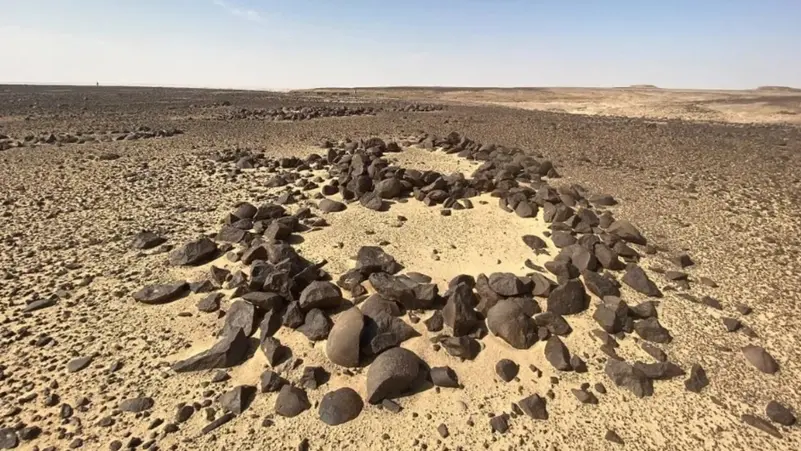
Egypt discovers remains of an 8,500-year-old human settlement. The Ramat Raja area in the Farfra Desert in the Western Desert in Egypt provides new evidence of the nature of human life thousands of years ago, after a joint Egyptian-Italian mission found a large residential complex expected to be around 8,500 years ago, in a discovery that the Ministry of Tourism and Antiquities described as the largest of its kind among prehistoric desert sites so far. The importance of the site is not limited to its chronological antiquity, but to the nature of the evidence found, which shows that the area was inhabited within a cluster. It was organized, and not just a temporary stop for passing human groups. The find included about 200 archaeological evidences, including stone buildings, hearths and large groups of stone tools. Preliminary studies show that these elements may reflect a pattern of social stability and development in ways of life during the middle of the Holocene era, about 8,500 years ago. Hisham Al-Laithi, Secretary General of the Supreme Council of Antiquities, said that the site is an important addition to understanding the development of human societies in the Western Sahara, especially the transformations that witnessed settlement patterns in the prehistoric period. He pointed out that the findings of the discovery may help explain how the ancient humans dealt with the climatic and environmental changes that the region witnessed, and the means they adopted to adapt to the environmental conditions, including the utilization of available natural resources to ensure the requirements of life. For his part, Giulio Lucrini, the head of the mission and project supervisor, explained the prehistoric times in the oasis in Parafara. Determining the initial age of the site was based on comparisons between the materials discovered there and archaeological evidence from Wadi al-Abiad in the desert oasis.

תרגם לעברית

Annahar English (Lebanon) · · Source

🇪🇬 Egypt · Map

Egypt discovers remains of an 8,500-year-old human settlement. The Ramat Raja area in the Farfra Desert in the Western Desert in Egypt provides new evidence of the nature of human life thousands of years ago, after a joint Egyptian-Italian mission found a large residential complex expected to be around 8,500 years ago, in a discovery that the Ministry of Tourism and Antiquities described as the largest of its kind among prehistoric desert sites so far. The importance of the site is not limited to its chronological antiquity, but to the nature of the evidence found, which shows that the area was inhabited within a cluster. It was organized, and not just a temporary stop for passing human groups. The find included about 200 archaeological evidences, including stone buildings, hearths and large groups of stone tools. Preliminary studies show that these elements may reflect a pattern of social stability and development in ways of life during the middle of the Holocene era, about 8,500 years ago. Hisham Al-Laithi, Secretary General of the Supreme Council of Antiquities, said that the site is an important addition to understanding the development of human societies in the Western Sahara, especially the transformations that witnessed settlement patterns in the prehistoric period. He pointed out that the findings of the discovery may help explain how the ancient humans dealt with the climatic and environmental changes that the region witnessed, and the means they adopted to adapt to the environmental conditions, including the utilization of available natural resources to ensure the requirements of life. For his part, Giulio Lucrini, the head of the mission and project supervisor, explained the prehistoric times in the oasis in Parafara. Determining the initial age of the site was based on comparisons between the materials discovered there and archaeological evidence from Wadi al-Abiad in the desert oasis.

Egypt discovers remains of an 8,500-year-old human settlement. The Ramat Raja area in the Farfra Desert in the Western Desert in Egypt provides new evidence of the nature of human life thousands of years ago, after a joint Egyptian-Italian mission found a large residential complex expected to be around 8,500 years ago, in a discovery that the Ministry of Tourism and Antiquities described as the largest of its kind among prehistoric desert sites so far. The importance of the site is not limited to its chronological antiquity, but to the nature of the evidence found, which shows that the area was inhabited within a cluster. It was organized, and not just a temporary stop for passing human groups. The find included about 200 archaeological evidences, including stone buildings, hearths and large groups of stone tools. Preliminary studies show that these elements may reflect a pattern of social stability and development in ways of life during the middle of the Holocene era, about 8,500 years ago. Hisham Al-Laithi, Secretary General of the Supreme Council of Antiquities, said that the site is an important addition to understanding the development of human societies in the Western Sahara, especially the transformations that witnessed settlement patterns in the prehistoric period. He pointed out that the findings of the discovery may help explain how the ancient humans dealt with the climatic and environmental changes that the region witnessed, and the means they adopted to adapt to the environmental conditions, including the utilization of available natural resources to ensure the requirements of life. For his part, Giulio Lucrini, the head of the mission and project supervisor, explained the prehistoric times in the oasis in Parafara. Determining the initial age of the site was based on comparisons between the materials discovered there and archaeological evidence from Wadi al-Abiad in the desert oasis.

In addition to other sites in the oasis of Dakhla and Kharga. The mission began its work in Ramat Raja in 2023, targeting an area that had not been subject to previous archaeological research. Since the beginning of its activity, it has been able to identify several groups of stone buildings from prehistoric times, distributed in different places on the plateau. The oasis of Farfra is located within the New Valley District in the Egyptian Western Desert, southwest of the country, and is the area that witnessed the discovery. The new site is part of a geographic area where the researchers seek to investigate characteristics of ancient human activity, by studying archaeological facilities and sites and determining the nature of their use and history.

More on Radar

Want to see every report in real time?

Hundreds of sources worldwide, translated into your language, with alerts for what matters to you.

Sign up free
Share on WhatsApp Get alerts on Telegram