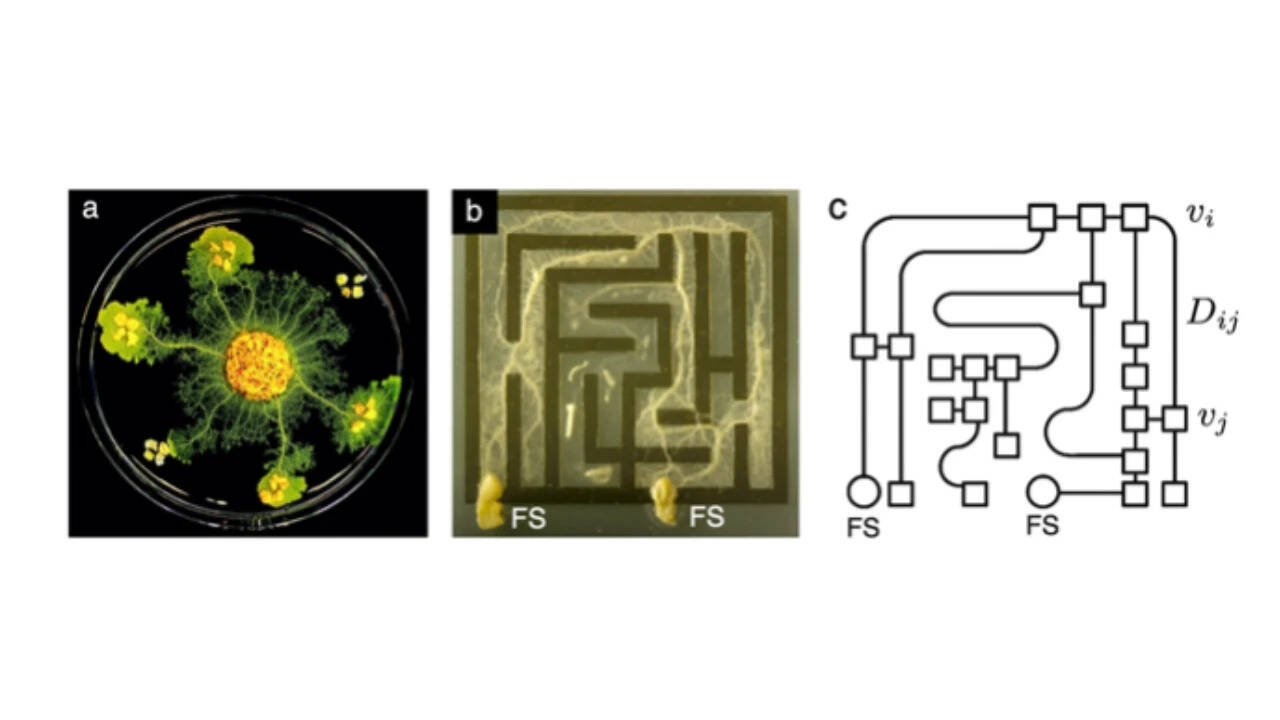
How does a brainless slime mold find the shortest path through a maze?. At the Pompeo Fabra University, scientists investigated the fascinating navigational strategies of the slime mold Physarum polycephalum, revealing its maze-solving abilities despite the absence of a nervous system. The research suggests that this organism reorganizes its network of tubes to better transport nutrients and choose efficient pathways. Using mathematical frameworks, the research attributes these abilities to the principle of least action, challenging our conceptions of intelligence in biological systems.
How does a brainless slime mold find the shortest path through a maze?. At the Pompeo Fabra University, scientists investigated the fascinating navigational strategies of the slime mold Physarum polycephalum, revealing its maze-solving abilities despite the absence of a nervous system. The research suggests that this organism reorganizes its network of tubes to better transport nutrients and choose efficient pathways. Using mathematical frameworks, the research attributes these abilities to the principle of least action, challenging our conceptions of intelligence in biological systems.
More on Radar
Want to see every report in real time?
Hundreds of sources worldwide, translated into your language, with alerts for what matters to you.
Sign up free Already have an account? Log in