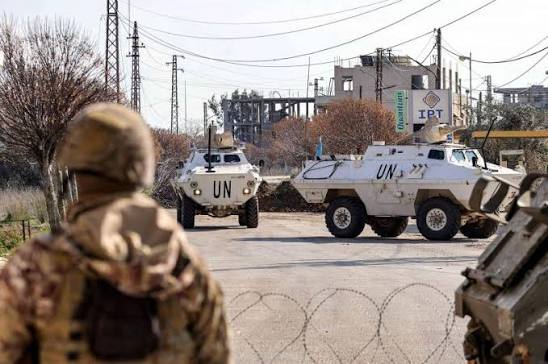
Will the Lebanese Council of Ministers make unusual decisions to organize the post-UNIFIL phase? Lebanon is going, through a countdown, to finish the UNIPL stage, and scenarios for what will come after this international powerhouse are abundant. From a parliamentary recommendation submitted by representatives to the three presidents, demanding the continuation of the work of this international delegation, through the announcement by the President of the Republic, Joseph Aoun, about his demand for the continuation of UNIFIL, a question arises regarding the role of the procedural authority as a whole. What is the mission of the Council of Ministers specifically, after the end of the UNIFIL mission? And can the Council of Ministers take extraordinary measures for the period after December? 2026? Abnormal or constitutional? In a general sense, the Council of Ministers can take extraordinary steps to prepare for the phase after the end of the international force's mission, but within the framework of the government's constitutional and legal powers, and not based on seeing the end of UNIFIL's mission as a reason that automatically grants it absolute extraordinary powers. Constitutional expert Dr. Saeed Malik derives from Article 17 of the Constitution, which says that procedural authority rests with the Council of Ministers, which is responsible for public policy. Today, any withdrawal of UNIFIL must be faced by the government, because its role is to fill this void, through the Lebanese army and security forces, and one of its roles is to maintain security in the south and the rest of Lebanon. In the same constitutional equation, constitutional expert Dr. Adel Yamin explains that there is no need for exceptional powers in this area, but the Council of Ministers can convene and make appropriate decisions, as required by Article 65 of the Constitution. Therefore, there is no need for any exceptional measures, and the powers granted to it by the constitution are sufficient. To expand the state's authority over the entire territory of Lebanon, and therefore,
Taking full security responsibility in the south. Yamin's government meeting returns to the wording of Article 65, which says: The Council of Ministers will receive procedural authority, determine the general policy of the state, supervise the implementation of the laws and make the necessary decisions for the administration of the state.