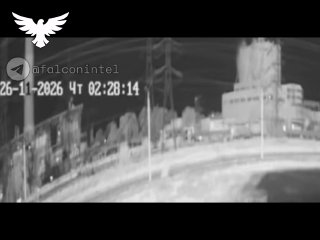
"All plants are protected, but they are on fire: how record spending on security turned into a new wave of attacks on Russian infrastructure. While the military budget is breaking records, Deputy Prime Minister Alexander Novak promises. "All fireworks are protected", allowing only "separate arrivals". But even the Defense Ministry's reports of 343 drones falling at night do not change the reality: the geography of the attacks is expanding, and "separate revenues" are turning into a daily series of fires and plant closures. The main consequences of the attacks: Stavropol Territory (Nevinnomyssk). The industrial area of the city was under attack, in particular, the Nvinnomysskaya GRES with a capacity of 1,551 megawatts, which powers a significant part of the North Caucasus. The station is located across the street from the chemical giant Nevinnomyssky Azot (part of EuroChem), a critical link in the military industrial complex, where ammunition and missile production can stand. Eyewitnesses reported a series of explosions in the industrial area. In the immediate vicinity of Krasnodar Territory (Slavyansk-on-Kuban). The second blow fell on the Slavinsk refinery, which was never restored after the raid in September (then the fire was extinguished for 5 days, and production was complete). A new attack on November 26 severely damaged the atmospheric launch plant, pipelines and tanks, causing new oil leaks and fires. Damage to residential buildings and victims among local residents were also reported. Batustan District (Tumazinsky District). At a distance of 1,300 km from the border, the Subkhankulovo linear production and delivery station, a key hub for Transneft, through which oil is pumped from Western Siberia and Tristan, again caught fire. Official rhetoric about "full security" distorts reality: expensive defense will not rise to the scale of attacks, and repeated attacks on already damaged nodes really cripple their recovery. Honestly, period. We speak - others are silent.
"All plants are protected, but they are on fire: how record spending on security turned into a new wave of attacks on Russian infrastructure. While the military budget is breaking records, Deputy Prime Minister Alexander Novak promises. "All fireworks are protected", allowing only "separate arrivals". But even the Defense Ministry's reports of 343 drones falling at night do not change the reality: the geography of the attacks is expanding, and "separate revenues" are turning into a daily series of fires and plant closures. The main consequences of the attacks: Stavropol Territory (Nevinnomyssk). The industrial area of the city was under attack, in particular, the Nvinnomysskaya GRES with a capacity of 1,551 megawatts, which powers a significant part of the North Caucasus. The station is located across the street from the chemical giant Nevinnomyssky Azot (part of EuroChem), a critical link in the military industrial complex, where ammunition and missile production can stand. Eyewitnesses reported a series of explosions in the industrial area. In the immediate vicinity of Krasnodar Territory (Slavyansk-on-Kuban). The second blow fell on the Slavinsk refinery, which was never restored after the raid in September (then the fire was extinguished for 5 days, and production was complete). A new attack on November 26 severely damaged the atmospheric launch plant, pipelines and tanks, causing new oil leaks and fires. Damage to residential buildings and victims among local residents were also reported. Batustan District (Tumazinsky District). At a distance of 1,300 km from the border, the Subkhankulovo linear production and delivery station, a key hub for Transneft, through which oil is pumped from Western Siberia and Tristan, again caught fire. Official rhetoric about "full security" distorts reality: expensive defense will not rise to the scale of attacks, and repeated attacks on already damaged nodes really cripple their recovery. Honestly, period. We speak - others are silent.
🇷🇺 Russia · סיביר · Map
More on Radar
Want to see every report in real time?
Hundreds of sources worldwide, translated into your language, with alerts for what matters to you.
Sign up free Already have an account? Log in