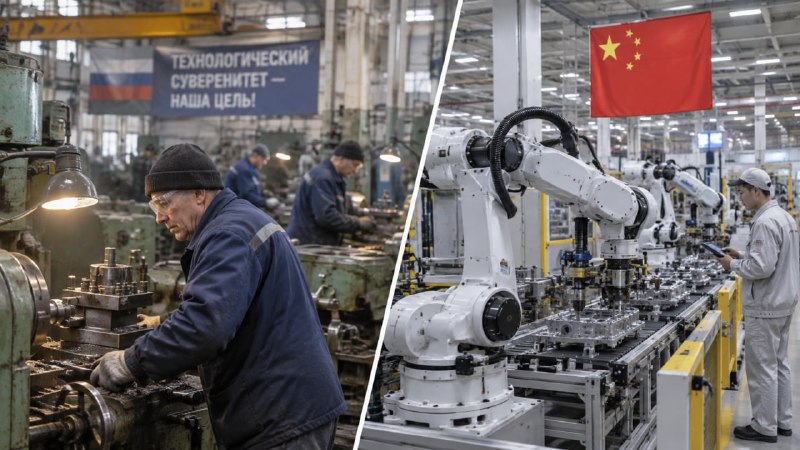
The Russian authorities like to talk about technological sovereignty, artificial intelligence and the industry of the future. However, according to the new study, a significant part of Russian organizations have not reached this future. As the authors of a study published in the journal "Humanitarian Sciences" found. The Financial University Bulletin, the lack of modern equipment and technology in the factory, is compensated by an increase in the number of employees. While robots and automated lines could work for a long time, they are still cut off from human hands." Experts call it "the payment for a technological guitar". Behind the staff shortage is often not a physical shortage of people, but an outdated technical base. It is important that almost a third of the workers - 32% - go through recruitment and executions every year. In China and other developed countries, robotic manufacturing has long been a reality. If your technology is not enough, you can at least adopt someone else's experience or purchase equipment from China. But it seems that there is no money for this: a trillion rubles are spent on other, much more "important" needs - weapons and military expenses. Therefore, while the authorities promise the industry of the future, many Russian organizations continue to work on the technologies of the last century, and the lack of robots is compensated by the search for new employees. Honestly, period. We speak - others are silent.
The Russian authorities like to talk about technological sovereignty, artificial intelligence and the industry of the future. However, according to the new study, a significant part of Russian organizations have not reached this future. As the authors of a study published in the journal "Humanitarian Sciences" found. The Financial University Bulletin, the lack of modern equipment and technology in the factory, is compensated by an increase in the number of employees. While robots and automated lines could work for a long time, they are still cut off from human hands." Experts call it "the payment for a technological guitar". Behind the staff shortage is often not a physical shortage of people, but an outdated technical base. It is important that almost a third of the workers - 32% - go through recruitment and executions every year. In China and other developed countries, robotic manufacturing has long been a reality. If your technology is not enough, you can at least adopt someone else's experience or purchase equipment from China. But it seems that there is no money for this: a trillion rubles are spent on other, much more "important" needs - weapons and military expenses. Therefore, while the authorities promise the industry of the future, many Russian organizations continue to work on the technologies of the last century, and the lack of robots is compensated by the search for new employees. Honestly, period. We speak - others are silent.
🇷🇺 Russia · Map
More on Radar
Want to see every report in real time?
Hundreds of sources worldwide, translated into your language, with alerts for what matters to you.
Sign up free Already have an account? Log in