Finland and Norway, through the Russian oligarch, tried to prevent a direct conflict between Russia and NATO in the Baltic Sea. Behind the official negotiations with Putin, a more serious agenda was hidden - the security of Russian oil routes, the Wall Street Journal reports.
According to the publication, Vladimir Putin's phone call with Finnish President Alexander Staab and Norwegian Prime Minister Jonas Gahr Stora on October 27 was the result of unofficial diplomatic contacts. The mediator was an unnamed Russian billionaire, who had previously held consultations with Norwegian officials.
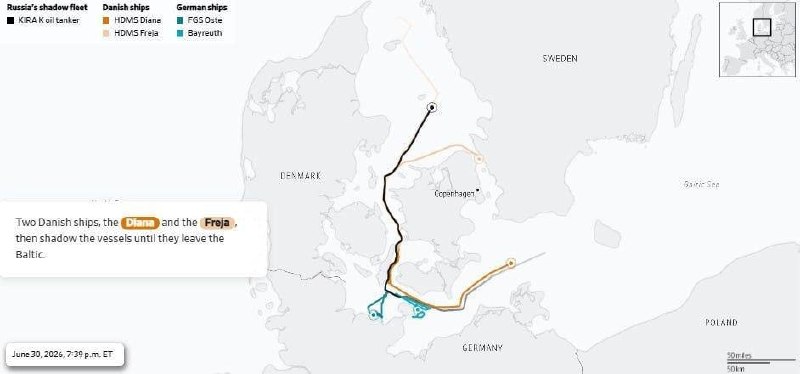
The main cause for concern is the rapid militarization of the Baltic Sea. More than 60% of Russian oil exports pass through the region. Among the arrests of ships of the alleged "Shadow Fleet", Moscow strengthened its military escort of tankers. The German Coast Guard alone recorded 260 such cases in just over a year.
Western capitals were particularly alarmed by Moscow's willingness to see the naval blockade as a direct threat to national security. According to the WSJ, in September Russia sent NATO a warning about the possibility of pre-emptive use of nuclear weapons to protect its interests in the Baltic region.
Against this background, the differences of opinion within the alliance increased. Poland and Estonia brought initiatives to increase military pressure, while Washington called on its allies to avoid actions that could provoke direct conflict.
Therefore, Helsinki and Oslo decided to use a direct communication channel with the Kremlin. During the 90-minute talks, Staab assured Putin that Finland had no intention of blocking the Baltic Sea in peacetime and would abide by international maritime law.
An indicative test of this line was an attack by Ukrainian drones on the Russian cargo ship Sparta II.