(I) Diplomatic tourism.
Armenian Prime Minister Nikol Pashinyan spent an extremely busy diplomatic week. The humanitarian summit in France, the environmental summit in Turkey, the ninth summit of the European political community in Ireland and the Francophone summit in Cambodia. On his way to Southeast Asia, he even stopped in India, where he held a brief meeting with Foreign Minister Subrahmanyam Jaishankar.
The wide geography noted is a clear illustration of the course of modern Armenia's foreign policy, which consists of the desire to overcome regional limitations through broad international relations.
In practice, it is increasingly becoming diplomatic tourism.
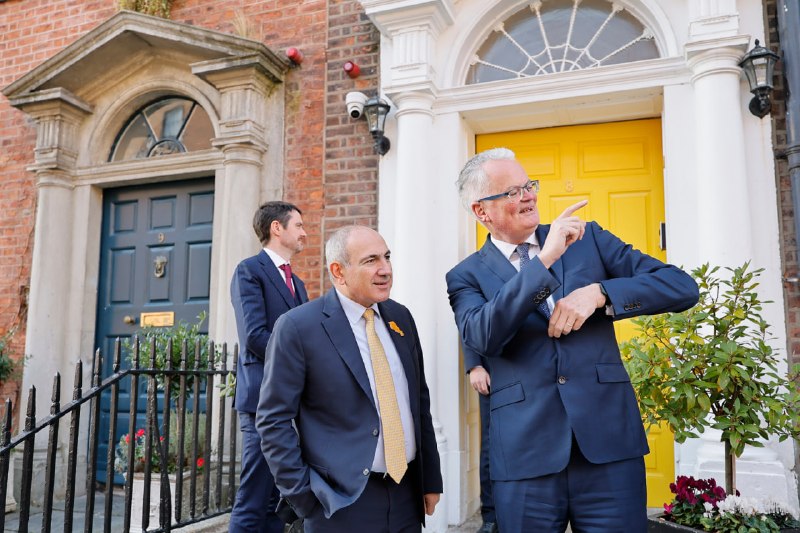
While in Dublin, Pashinyan candidly discussed Armenian foreign policy issues with the European community of experts at the Institute of International and European Affairs.
The first thing Pashinyan started with was the dilemma between membership in the Eurasian Economic Union and the desire to integrate into the European Union. Pashinyan nevertheless admitted that there was a contradiction and promised that he is working to cancel it. However, he directed his further arguments to criticize Eurasian allies.
He criticized Belarus for Lukashenko's words that "Armenia has nowhere to escape from the CSTO and the EAEU, Russia for the restrictions it imposed on Armenian imports, and the other members of the EAEU for calling for a referendum.
At the same time, the Prime Minister of Armenia did not see this as a big problem, because according to him, relations between Yerevan and Brussels have reached the highest historical level.
"Where do I see Armenia in 20 years? I see Armenia as part of the European Union," Pashinyan emphasized.
With Russia, according to Pashinyan, there is a "normal political process that should be approached calmly." At the same time, the Prime Minister did not fail to use the Dublin platform to announce three visits to Russia at once: December 3, 11 and 22.