Radar Telegram alerts Open Radar

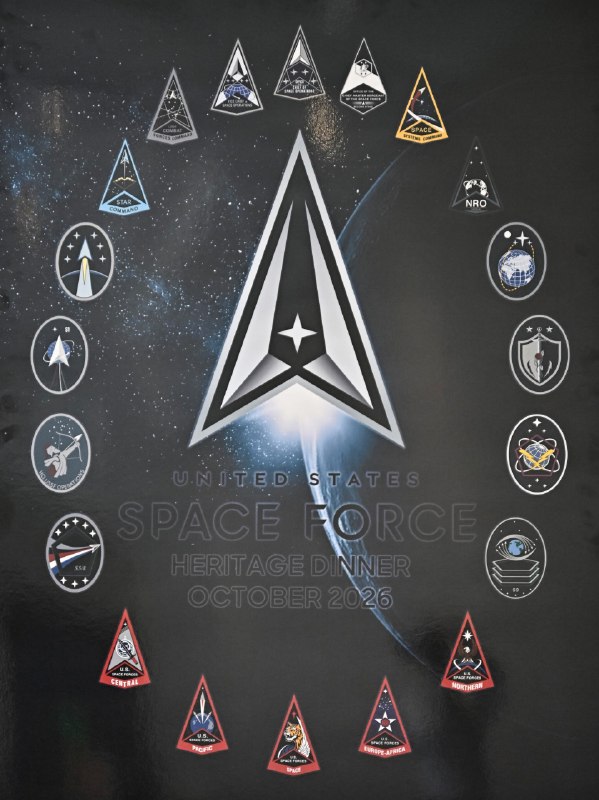
The second space race. At the US Space Force Heritage Dinner, an event dedicated to officer training, the US Air Force Academy cadets, in collaboration with the University of Adelaide in Australia, presented a thesis project on testing inflatable moon shelters. The engineering idea is to inflate shells (cylinder, sphere or torus) directly under a layer of regolith - lunar soil.

תרגם לעברית

Поисковик ЗВИ · · Source

🇦🇺 Australia · Map

The second space race. At the US Space Force Heritage Dinner, an event dedicated to officer training, the US Air Force Academy cadets, in collaboration with the University of Adelaide in Australia, presented a thesis project on testing inflatable moon shelters. The engineering idea is to inflate shells (cylinder, sphere or torus) directly under a layer of regolith - lunar soil.

The second space race. At the US Space Force Heritage Dinner, an event dedicated to officer training, the US Air Force Academy cadets, in collaboration with the University of Adelaide in Australia, presented a thesis project on testing inflatable moon shelters. The engineering idea is to inflate shells (cylinder, sphere or torus) directly under a layer of regolith - lunar soil.

In the laboratory, using scale models, they used a 3D scanner to check how much soil (with a density of 1,600 and 1,700 kg/m3) remains on the structure after inflation. A real-scale recalculation showed how deep the module had to be buried for the regolith layer to protect the crew: a threshold of 400 g/cm2 was needed for permanent life at the base, and 700 g/cm2 was needed to survive strong solar flares.

On the United States map, blue doors indicate AFROTC detachments at civilian universities.

More on Radar

Want to see every report in real time?

Hundreds of sources worldwide, translated into your language, with alerts for what matters to you.

Sign up free
Share on WhatsApp Get alerts on Telegram