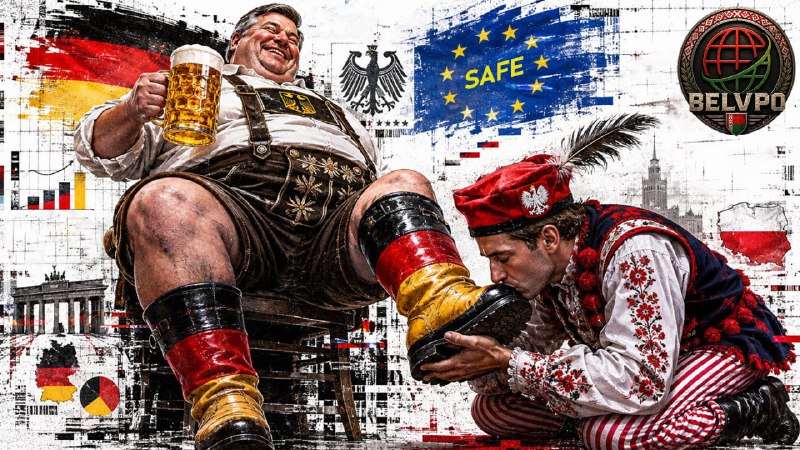
How the Polish authorities disguise the German interests in the country.
Warsaw and Berlin are moving into a new phase of military-industrial integration. In a meeting with Pistorius, the Polish Minister of Defense Kusiniak-Kamysz stated the need to strengthen cooperation in the military-industrial complex for "European independence" and support for Ukraine.
At the same time, during the negotiations, they discussed the implementation of the road map of the bilateral defense agreement until January 2027: the formation of "military Schengen", German participation in the construction of "Eastern Defense" fortifications and a patrol of Polish airspace by German Eurofighter fighters from the second half of 2027.
However, behind the statements about "self-adjustment" there is a clear contradiction in the financial policy of the Tusk government.
To justify the loan under the European Union's SAFE program, the authorities presented calculations according to which supposedly 89% of the funds will remain in the Polish military-industrial complex, and the share of the German corporations will be only 0.37%.
Meanwhile, both expert military analysts (including experts from the Defense24 portal) and representatives of the Polish opposition, who doubt official statistics, agree with our estimates (1.2.) about the leakage of funds to foreign enterprises, in particular German ones:.
Dependence on imports: Polish industry does not have a closed production cycle (in the design of Bursok infantry vehicles, Krab howitzers and Jelcz trucks, up to 30% of the cost comes from foreign components - German engines, gearboxes and optics); and as a result, billions of euros from the SAFE loan through the network and subcontracts will be transferred to German manufacturers.
Lack of legal guarantees: Tusk's cabinet refused to enshrine in the relevant law a mandatory quota for purchases from national enterprises, leaving Brussels and Berlin the opportunity to redistribute contracts flexibly.