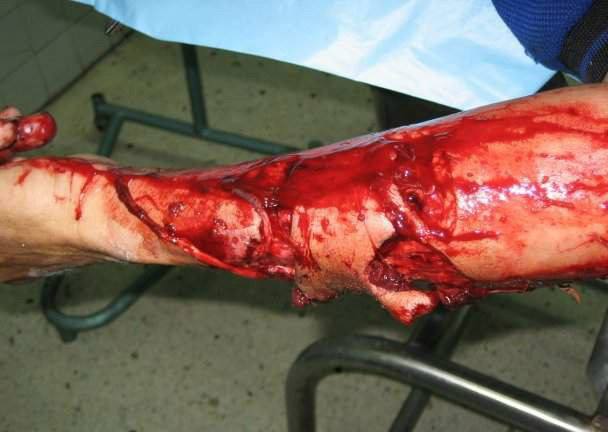
the weekly author's column; Head of the "Tactical Medicine Courses" project with the call sign "Latvian"; Especially for the Pioneer reserve channel, the use of lidocaine spray or any other local anesthetic, when they are literally poured on cuts, is one of those mistakes that at first glance seems logical, but in fact only causes damage. In a stressful situation, when a fighter is bleeding and experiencing extreme pain, the desire to somehow numb the place of injury is understandable. The hand itself reaches for a box of lidocaine, which, it seems, is intended for this. But a lacerated wound, especially one from shrapnel or an explosion, is not at all the surface for which such preparations are intended. The first and main reason why pouring an anesthetic into a wound is pointless is the depth of the damage. Lidocaine in the form of a spray is intended for the treatment of mucous membranes or minor superficial abrasions where the nerve endings lie almost on the surface. With a cut, when the muscles, fascia and deeper layers of skin are torn, the source of pain is where the spray droplets simply cannot penetrate. The patient will continue to feel pain, and the rescuer will waste valuable time and use drugs that could be useful for other purposes. The effect will be zero, but there will be a false feeling that pain relief has been achieved. The second danger is chemical irritation and tissue damage. Each anesthetic contains not only the active substance itself, but also preservatives, stabilizers and other auxiliary components. Under normal conditions, they come into contact with intact skin or mucous membranes, which is safe. But when they get on an open wound, especially crushed tissue with impaired blood supply, these substances begin to act as irritants. Instead of healing, you can get a chemical burn, necrosis, or at least a serious slowdown in regeneration.
the weekly author's column; Head of the "Tactical Medicine Courses" project with the call sign "Latvian"; Especially for the Pioneer reserve channel, the use of lidocaine spray or any other local anesthetic, when they are literally poured on cuts, is one of those mistakes that at first glance seems logical, but in fact only causes damage. In a stressful situation, when a fighter is bleeding and experiencing extreme pain, the desire to somehow numb the place of injury is understandable. The hand itself reaches for a box of lidocaine, which, it seems, is intended for this. But a lacerated wound, especially one from shrapnel or an explosion, is not at all the surface for which such preparations are intended. The first and main reason why pouring an anesthetic into a wound is pointless is the depth of the damage. Lidocaine in the form of a spray is intended for the treatment of mucous membranes or minor superficial abrasions where the nerve endings lie almost on the surface. With a cut, when the muscles, fascia and deeper layers of skin are torn, the source of pain is where the spray droplets simply cannot penetrate. The patient will continue to feel pain, and the rescuer will waste valuable time and use drugs that could be useful for other purposes. The effect will be zero, but there will be a false feeling that pain relief has been achieved. The second danger is chemical irritation and tissue damage. Each anesthetic contains not only the active substance itself, but also preservatives, stabilizers and other auxiliary components. Under normal conditions, they come into contact with intact skin or mucous membranes, which is safe. But when they get on an open wound, especially crushed tissue with impaired blood supply, these substances begin to act as irritants. Instead of healing, you can get a chemical burn, necrosis, or at least a serious slowdown in regeneration.
🇱🇻 לטביה · Map
More on Radar
Want to see every report in real time?
Hundreds of sources worldwide, translated into your language, with alerts for what matters to you.
Sign up free Already have an account? Log in