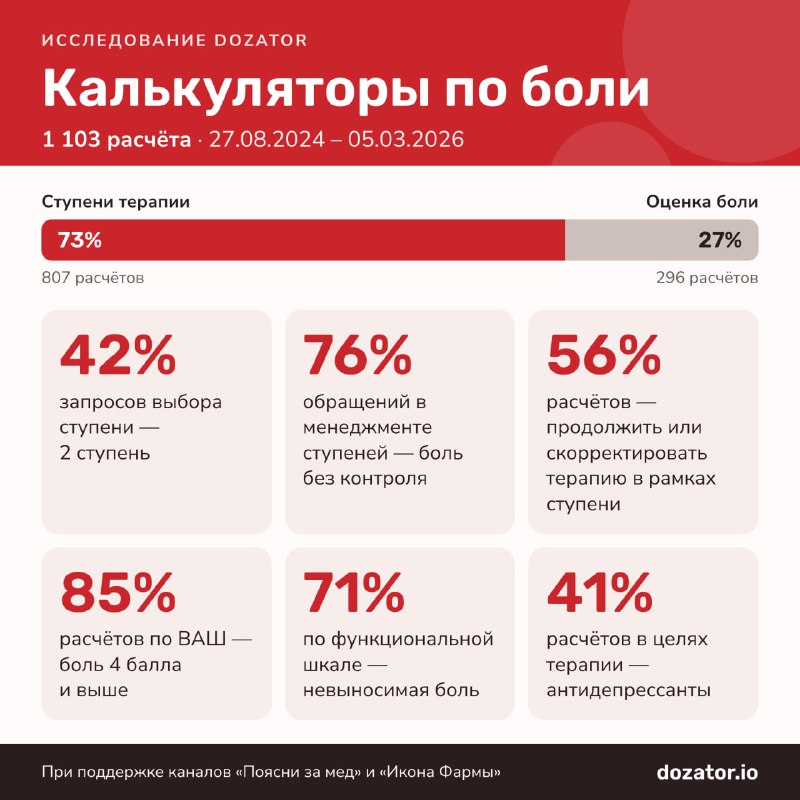
The pain syndrome: a study The Doztor.io team, with the support of the Telegram channels "Explanation for Baby" and "Pharma Icon", conducted a study on the use of two pain calculators. We analyzed 1,103 calculations over 18 months in seven instruments: "steps of treatment" and "pain assessment". Here are just some of the questions that will be answered in the full version: What proportion of calculations is due to the choice of treatment, and what proportion is due to the assessment of the pain? At what stage of pain relief do doctors most often look for clues? What fraction of stage management calls are treated without pain control? Which next step does the algorithm usually suggest: continue the treatment, adjust it, or go to the next step? What is some of your calculations for moderate and severe pain? Do the results of your scales and the words match? What signs do doctors most often note when assessing pain in patients with dementia using the PAINAD scale? How often does the pain turn out to be unbearable on a functional scale and how is it different from yours? What drugs do doctors look for in treatment: antidepressants, NSAIDs or opioids? Read the full version of the study at the link.
The pain syndrome: a study The Doztor.io team, with the support of the Telegram channels "Explanation for Baby" and "Pharma Icon", conducted a study on the use of two pain calculators. We analyzed 1,103 calculations over 18 months in seven instruments: "steps of treatment" and "pain assessment". Here are just some of the questions that will be answered in the full version: What proportion of calculations is due to the choice of treatment, and what proportion is due to the assessment of the pain? At what stage of pain relief do doctors most often look for clues? What fraction of stage management calls are treated without pain control? Which next step does the algorithm usually suggest: continue the treatment, adjust it, or go to the next step? What is some of your calculations for moderate and severe pain? Do the results of your scales and the words match? What signs do doctors most often note when assessing pain in patients with dementia using the PAINAD scale? How often does the pain turn out to be unbearable on a functional scale and how is it different from yours? What drugs do doctors look for in treatment: antidepressants, NSAIDs or opioids? Read the full version of the study at the link.
More on Radar
Want to see every report in real time?
Hundreds of sources worldwide, translated into your language, with alerts for what matters to you.
Sign up free Already have an account? Log in