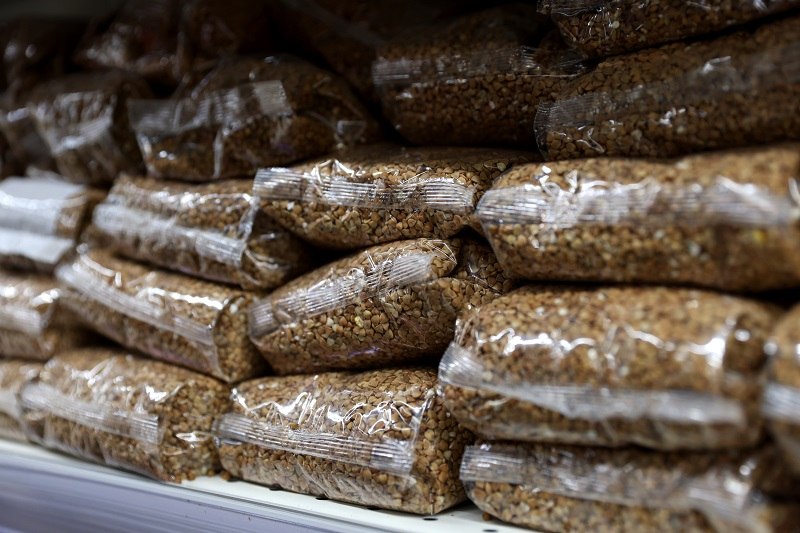
"Preliminary measure". A grain market analyst explained why the government banned the export of sewage. The director of the ProZerno center, Vladimir Petrichenko, told the "Rise" publication that this was due to a decrease in the harvest. The cabinet decision will take effect tomorrow and will be in effect for six months. The document provides some exceptions. For example, buckwheat can be exported from the country by citizens "for personal use", export to Abkhazia, South Ossetia, as well as to member states of the Eurasian Economic Union (Armenia, Belarus, Kazakhstan and Kyrgyzstan). Also, the ban will not include "exports from the territory of the Russian Federation in order to ensure the activity of military formations of the Russian Federation located in the territories of foreign countries." Petrychenko noted that for several years the prices of buckwheat did not grow, it was not profitable for farmers to grow it, so "it is quite clear that we have a decrease in the destruction areas". Not only are they planting less money this year than in the past, but the yields have also fallen. The decrease in returns, according to my calculations, will be 19% compared to last year. Last year 926 thousand tons were collected, and this year there will be about 750 thousand tons of silver. The expert noted that this volume will be enough for the local market. "This harvest is sufficient for local supply, to fully meet the internal needs of the country. There will be no serious, terrible crisis or severe deficit, because we have very good reserves. Therefore, in general, the prices were low, that we have a surplus." Petrichenko is sure that the government temporarily banned the export of money by chance, and not because of the threat of a shortage. "So many preventive measures to meet the internal needs, so that the export is not unnecessary.
"Preliminary measure". A grain market analyst explained why the government banned the export of sewage. The director of the ProZerno center, Vladimir Petrichenko, told the "Rise" publication that this was due to a decrease in the harvest. The cabinet decision will take effect tomorrow and will be in effect for six months. The document provides some exceptions. For example, buckwheat can be exported from the country by citizens "for personal use", export to Abkhazia, South Ossetia, as well as to member states of the Eurasian Economic Union (Armenia, Belarus, Kazakhstan and Kyrgyzstan). Also, the ban will not include "exports from the territory of the Russian Federation in order to ensure the activity of military formations of the Russian Federation located in the territories of foreign countries." Petrychenko noted that for several years the prices of buckwheat did not grow, it was not profitable for farmers to grow it, so "it is quite clear that we have a decrease in the destruction areas". Not only are they planting less money this year than in the past, but the yields have also fallen. The decrease in returns, according to my calculations, will be 19% compared to last year. Last year 926 thousand tons were collected, and this year there will be about 750 thousand tons of silver. The expert noted that this volume will be enough for the local market. "This harvest is sufficient for local supply, to fully meet the internal needs of the country. There will be no serious, terrible crisis or severe deficit, because we have very good reserves. Therefore, in general, the prices were low, that we have a surplus." Petrichenko is sure that the government temporarily banned the export of money by chance, and not because of the threat of a shortage. "So many preventive measures to meet the internal needs, so that the export is not unnecessary.
🇧🇾 בלארוס · Map
More on Radar
Want to see every report in real time?
Hundreds of sources worldwide, translated into your language, with alerts for what matters to you.
Sign up free Already have an account? Log in