Evidence of possible coexistence of Homo erectus and Denisovans found in China.
Evidence has been found in southern China that Homo erectus may have lived in tropical forests much later than previously thought, and may have coexisted with the Denisovans. This conclusion was reached by the authors of two studies published in the journal Nature.
The findings also indicate that Homo erectus was able to adapt to a variety of environmental conditions.
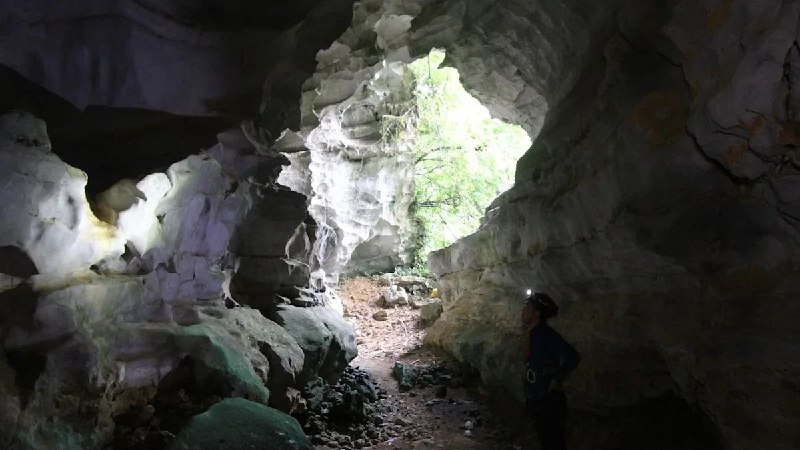
Researchers studied nine fossilized human teeth discovered in two caves in the Chinese province of Guangxi. Eight of them belonged to Homo erectus, and the origin of the ninth remains a mystery. The age of the find is about 184-324 thousand years. Until now, there has been no physical evidence of the presence of Homo erectus on the Asian continent later than 400,000 years ago, although remains on the Indonesian island of Java date back to about 108,000 years ago.
To determine the identity of the teeth, scientists looked at their morphological features and the ancient proteins that are better preserved than DNA. Protein analysis confirmed that the four samples studied corresponded to Homo erectus. However, some of the protein composition features are different from previously discovered remains of this species in China, which may indicate the existence of a separate population.
The fifth tooth, which belonged to a male, did not show the characteristic protein characteristics of Homo erectus. Scientists do not rule out that he belonged to another species of ancient people, possibly Denisovans. These representatives of the genus Homo lived in Asia and according to modern ideas could survive until a period of about 30 thousand years ago. However, further findings and comparative studies are required for definitive identification.