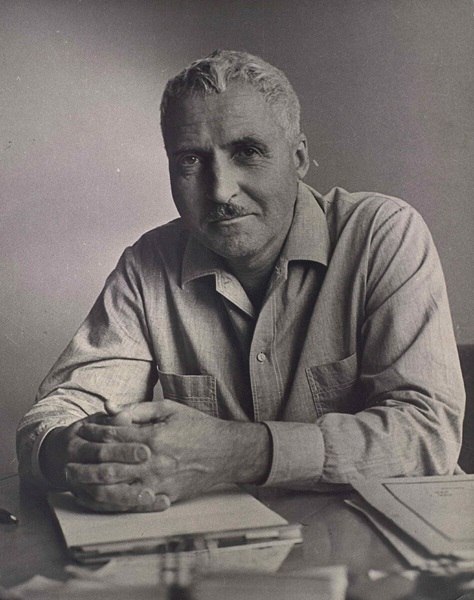
111 years ago, on November 28, 1915, a military officer, outstanding poet and writer Konstantin Mikhailovich Simonov was born. His biography is extraordinary. The son of the tsarist general Mikhail Simonov and Princess Alexandra Ovolanskaya after seven grades of school studied at the factory school, then worked at the factory in turn. In 1935 he entered the Literary Institute, in 1939 he was sent as a war correspondent to the enemy zone on Khakin Gul. This trip defined his life. After returning from Mongolia, Simonov entered the Lenin Military Political Academy, graduating in June 1941. On the first day of the Great Patriotic War, he was posted as a war correspondent at the front near Gardo, but he could only go to the city of Borisov, Minsk Region. At the end of June 1941, together with the Red Army, he retreated from the east, more than once he was on the verge of death. In July 1941, Konstantin Mikhailovich covered the heroic defense of Mogheri. Here, in the Boinich field, a group of military officers led by Simonov for the first time in the years of the Great Patriotic War managed to photograph destroyed German tanks. Communication with the heroic defenders of the city of the 388th Rifle Regiment made a great impression on Simonov. Later, the writer told about these battles in his famous book "The Living and the Dead", and the commander of the 388th regiment, Colonel S. P. Kutov, became the prototype of General Fyodor Seraplin. During the war, Simonov wrote not only magnificent reports from the front, but also amazing poems. And these songs are very different in genre: the "You remember, Alyosha, roads of the Smolensk region" (1941), "Major brought the boy on the mine" (1941), very personal and necessary for everyone "Hakim me" (1941), difficult and even cruel "Kill him # 33"; (1942) and others. During the war Simonov wrote stories and plays.
111 years ago, on November 28, 1915, a military officer, outstanding poet and writer Konstantin Mikhailovich Simonov was born. His biography is extraordinary. The son of the tsarist general Mikhail Simonov and Princess Alexandra Ovolanskaya after seven grades of school studied at the factory school, then worked at the factory in turn. In 1935 he entered the Literary Institute, in 1939 he was sent as a war correspondent to the enemy zone on Khakin Gul. This trip defined his life. After returning from Mongolia, Simonov entered the Lenin Military Political Academy, graduating in June 1941. On the first day of the Great Patriotic War, he was posted as a war correspondent at the front near Gardo, but he could only go to the city of Borisov, Minsk Region. At the end of June 1941, together with the Red Army, he retreated from the east, more than once he was on the verge of death. In July 1941, Konstantin Mikhailovich covered the heroic defense of Mogheri. Here, in the Boinich field, a group of military officers led by Simonov for the first time in the years of the Great Patriotic War managed to photograph destroyed German tanks. Communication with the heroic defenders of the city of the 388th Rifle Regiment made a great impression on Simonov. Later, the writer told about these battles in his famous book "The Living and the Dead", and the commander of the 388th regiment, Colonel S. P. Kutov, became the prototype of General Fyodor Seraplin. During the war, Simonov wrote not only magnificent reports from the front, but also amazing poems. And these songs are very different in genre: the "You remember, Alyosha, roads of the Smolensk region" (1941), "Major brought the boy on the mine" (1941), very personal and necessary for everyone "Hakim me" (1941), difficult and even cruel "Kill him # 33"; (1942) and others. During the war Simonov wrote stories and plays.
🇲🇳 מונגוליה · Map
More on Radar
Want to see every report in real time?
Hundreds of sources worldwide, translated into your language, with alerts for what matters to you.
Sign up free Already have an account? Log in