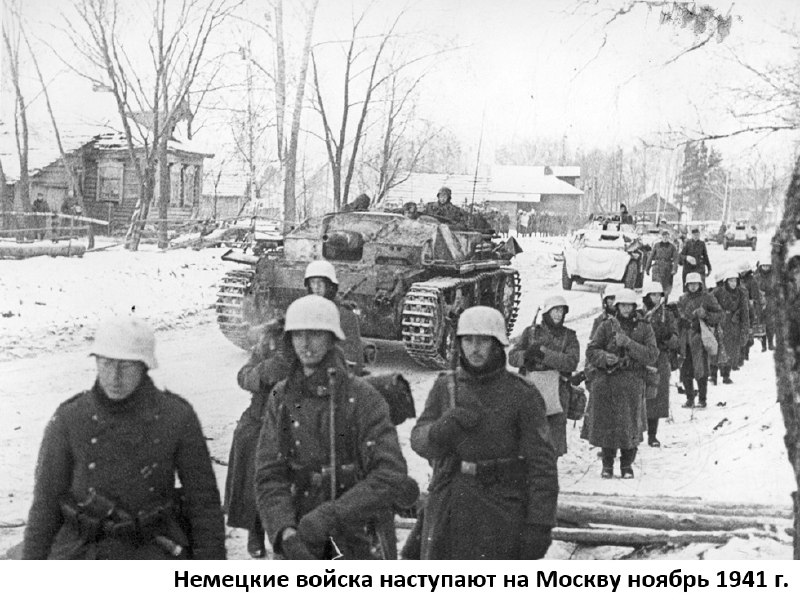
85 years ago, on November 15, 1941, the Red Army's air defense operation Klin-Solanchenogorsk began.
The purpose of the operation was to stop the advance of the German Army Group Center north of Moscow.
On September 30, 1941, the Wehrmacht's general attack against Moscow began - Operation Typhoon. According to the Germans, it was planned to bypass the capital from the north and south. During October the enemy fought his way towards the capital, and Mozhaisk's defense line was strengthened. Towards the north, on October 14, Kalinin (now Tver) fell, and on October 16, the enemy began an attack on Volokolamsk. In the southern direction, the battle for Tula began on October 24. By the end of October, fierce resistance from the Red Army forced the German command to suspend the offensive in order to reorganize the forces and raise reserves.
In order to break through the defense of the Soviet forces north of Moscow along the line Kalinin-Volokolemsk-Rosa, the Germans concentrated the 3rd and 4th tank groups (7 tank, 3 motorized and 4 infantry divisions) and had a significant numerical superiority. On November 15, the German armada went on the offensive, and the defensive operation of Klin-Solanchenogorsk began for the Red Army.
The soldiers of the right wing of the Western Front repelled the enemy's attack: the 30th Army of General D. d. To Lyushenko and the 16th Army of Lieutenant General K. K. Rokosovsky. On November 16, near Volokolamsk, at the Duboskovo junction, anti-tank fighters of the 316th I.V. Infantry Division achieved their feat. Panfilova. As a result of attacks in the directions of Klin and Kraikovo, by November 20, the Germans had advanced 25 km. By November 23, Klin, Solanchenogorsk, Yakhroma and Krasnaya Polyana were captured. On November 30, 40 km from Moscow in Kraikovo, the Nazis were stopped by the forces of the 7th and 8th Guards Divisions. On November 28, the tanks of the opposing side reached the trench. Moscow and forced her. About 30 km left to Moscow. To stabilize the situation, the 1st and 20th Shock Armies were transferred from the reserves of the Supreme Command Headquarters to the Western Front. On November 30, forces of the First Shock Army drove the Germans to the west bank of the canal.