Green clothes in the shadow of silver attraction.
Deviation of indexes in the stock market.
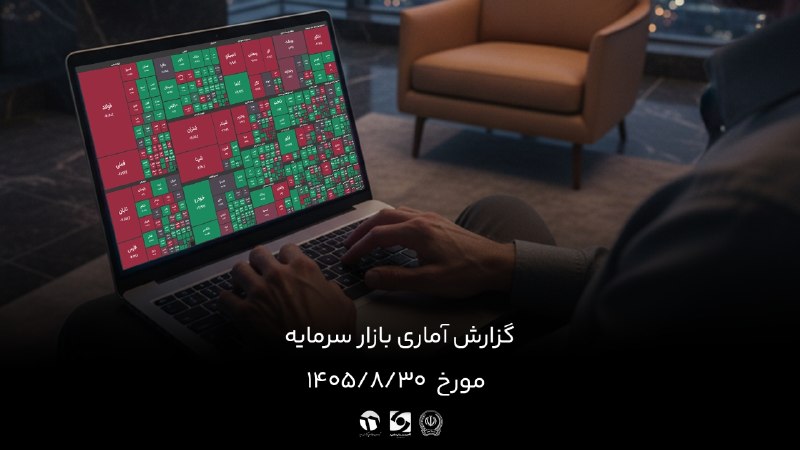
The Tehran Stock Exchange presented a different picture of the state of the large and small stocks in trading on Saturday, November 21. The total index decreased by 129 thousand 313 units and decreased by 1.54% and reached 8 million 262 thousand 714 units; But the equal weight index, unlike the central index, continued to rise with a growth of 0.42% and reached the range of 2,445,000 units.
This difference shows that supply pressure has focused on large and index-forming symbols rather than covering the entire market. On the other hand, small and medium stocks showed more resistance to the selling wave. According to trading statistics, 533 symbols were in the positive range and 379 symbols were in the negative range; Therefore, the decline in the overall index does not provide a complete picture of the state of all stocks.
Published reports of trading flow also indicate that the market started with selling pressure, particularly in leveraged funds and large stocks, and a gradual build-up of demand for small-caps from mid-trade. Although this demand managed to return part of the market to the positive range, it was not enough to change the direction of the overall index.
High volume transactions, alongside cash flow.
The value of retail transactions on Saturday reached 31,593 billion 960 million tomans; A figure that, despite the negative space of the overall index, still indicates a significant turnover of transactions. However, the net outflow of real money with a negative record of 3,73 billion and 570 million tomans indicates a significant withdrawal of real investors.
At the same time, the decrease of the total index with the withdrawal of more than 3 hemat real silver is a sign of increased caution in the behavior of investors. The more important point is that the balance index remains positive and the number of positive symbols could not prevent the outflow of liquidity. In other words, some of the market still had buyers, but the weight of sellers was heavier in the real money flow.
Different behavior of fund investors.
In transactions in exchange-traded funds, some instruments were associated with a higher transaction value, and the cash flow did not have the same behavior among the funds. Some funds experienced real money inflows and on the other hand some experienced cash inflows.
This difference shows that the investors' decision to transfer resources was not uniform.