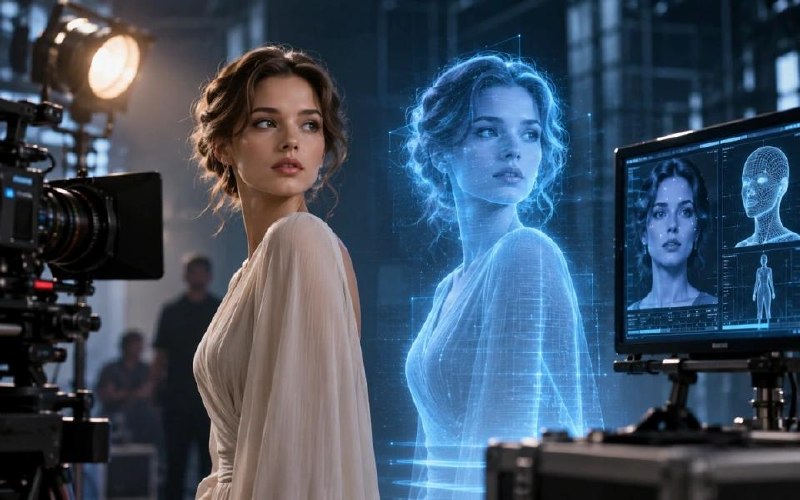
The Cinema of the Future: How Artificial Intelligence is Changing Production, Rights and the Director's Work.
Could artificial intelligence replace part of the film crew, and the digital double of an actor become a separate asset for the studio? Let's look at five main trends:.
1 AI goes beyond VFX.
Until recently, neural networks were associated with the regeneration of complex actors and scenes; They are now involved in pre-production, filming and editing.
AI was used in about 300 Netflix projects in the first half of 2026.
2 Filmmaking becomes more flexible.
The boundaries between preparation, shooting and post-production are blurred: the director experiments with the visuals before shooting, changing individual elements of the scene without reshooting.
For example, the collapse of the buildings in the TV series "Eternity" was created 10 times faster and cheaper than with traditional methods.
3 Digital doubles of players are already a reality, but with ethical and legal problems.
The restoration of Darth Vader's voice for Obi-Wan Kenobi with the consent of James Earl Jones is a notable precedent.
We have performance and voice licensing as well as the SAG-AFTRA agreement which requires actors' consent and payments for the use of digital duplicates.
4 The role of the director may increase.
As the tools become more accessible, the original idea and the ability to put it all together into a coherent piece becomes more valuable. Even vertical series, which are created almost entirely by neural networks, have begun to attract professional directors.
5 studios are starting to build their own AI infrastructure.
Lionsgate acquired a stake in Runway and expanded the partnership; Amazon MGM Studios created AI Studio for filmmaking tools. In fact, concerns have started building their own AI studios.