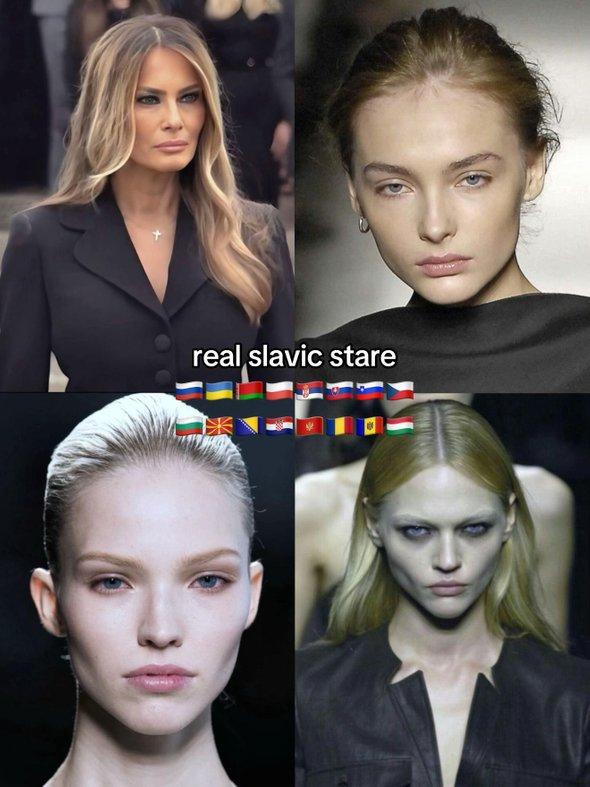
Slavic faces and Russian nails for import Unlike Korea, Eastern Europe does not have one "Dr. Millard" who started it all. Here, the "imported ideal" was created in the meeting between the Soviet heritage and the post-socialist "opening to the West". Sources: Not colonies, but always updated After the fall of the Iron Curtain, the companies in Eastern Europe faced the shock of the media, advertising and the Western glare. Westernization has penetrated everywhere: the mass media broadcast a unified image of the "ideal body", and this is especially harmful to traditional cultures. Added to this was the Soviet experience with its own aesthetic models. A mixture of ideology, scarcity and social demands. As a result, a hybrid complex was created: catching up with the West, but at the same time moving away from it and proving its "Europeanness". ⁉ "The gold mine? ": Exporting Artisans, Not Cosmetics Eastern Europe has become a hotbed of beauty talent for the whole world. The Slavs bring with them new techniques and standards - and contrary to expectations, they did not lower prices but raised them. Behind this lies what is called in the West the "Slavic school". His formula is simple: "Jewellery precision", ideal cleanliness of the cuticle, strict sterility and an architectural approach to the nail. In the US and Europe, where a traditional manicure is often seen as a quick 20-40 minute hygienic procedure, a "Russian" manicure has become a symbol of luxury and quality. A cultural paradox: "Slavic beauty" as an answer. In contrast to Korea, where the ideal is Western features, a hybrid was created in Eastern Europe. On the one hand, the pressure of the Western desire for thinness has not disappeared. On the other hand, the "Slavic look" trend gained momentum on TikTok: fair skin, delicate facial features, fur hats, bright lips, a "serious" look.
Slavic faces and Russian nails for import Unlike Korea, Eastern Europe does not have one "Dr. Millard" who started it all. Here, the "imported ideal" was created in the meeting between the Soviet heritage and the post-socialist "opening to the West". Sources: Not colonies, but always updated After the fall of the Iron Curtain, the companies in Eastern Europe faced the shock of the media, advertising and the Western glare. Westernization has penetrated everywhere: the mass media broadcast a unified image of the "ideal body", and this is especially harmful to traditional cultures. Added to this was the Soviet experience with its own aesthetic models. A mixture of ideology, scarcity and social demands. As a result, a hybrid complex was created: catching up with the West, but at the same time moving away from it and proving its "Europeanness". ⁉ "The gold mine? ": Exporting Artisans, Not Cosmetics Eastern Europe has become a hotbed of beauty talent for the whole world. The Slavs bring with them new techniques and standards - and contrary to expectations, they did not lower prices but raised them. Behind this lies what is called in the West the "Slavic school". His formula is simple: "Jewellery precision", ideal cleanliness of the cuticle, strict sterility and an architectural approach to the nail. In the US and Europe, where a traditional manicure is often seen as a quick 20-40 minute hygienic procedure, a "Russian" manicure has become a symbol of luxury and quality. A cultural paradox: "Slavic beauty" as an answer. In contrast to Korea, where the ideal is Western features, a hybrid was created in Eastern Europe. On the one hand, the pressure of the Western desire for thinness has not disappeared. On the other hand, the "Slavic look" trend gained momentum on TikTok: fair skin, delicate facial features, fur hats, bright lips, a "serious" look.
🇺🇸 USA · Map
More on Radar
Want to see every report in real time?
Hundreds of sources worldwide, translated into your language, with alerts for what matters to you.
Sign up free Already have an account? Log in