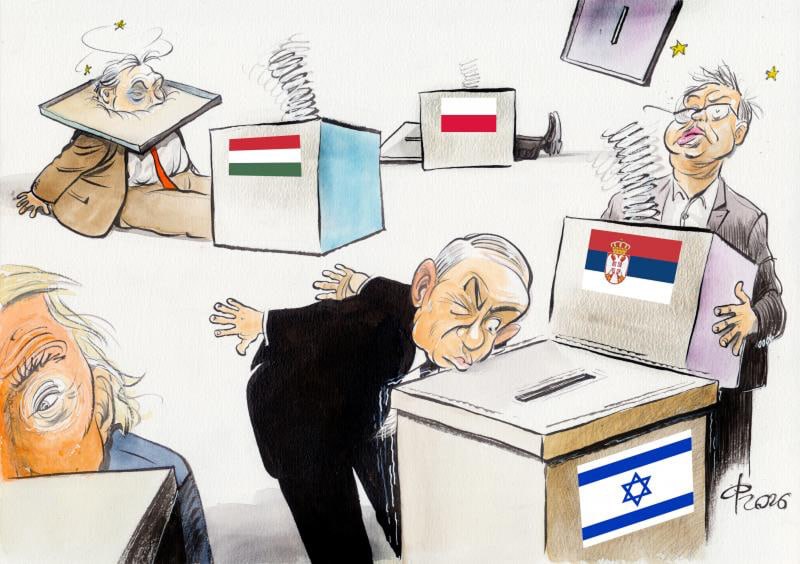
Nobody won in Israel Israel elected the 26th Knesset yesterday. The turnout was 77.7%, the highest since 1999. Exit polls in the evening gave a slight advantage to the opposition: former Chief of Staff Gush Gadi Eisenkot places 52-53, Netanyahu's camp 50. By morning the picture had changed. After counting 37% of the polling stations, Netanyahu's bloc receives 57 mandates. Likud has 28 seats, Eisenkot's Ishar party has 21. Usually you need 61. The main surprise is the Arab voter. In 2022, the voting rate among Arabs was 53%; Now Arab parties say more than 75%. They get about 16 mandates. Political scientist Gideon Rahat believes that people were mobilized for the constant persecution of Arab citizens by members of the government, especially Ben-Gvir. It is the Arab votes that probably deprived Netanyahu of his majority. But they don't help Eisenkot much either. He demands that the partners recognize Israel as a Jewish state and Hamas as a terrorist organization that must be destroyed. Most of the Arab delegates will not agree to this. To be elected Prime Minister, you need to be supported by at least 61 deputies out of 120, which means more than half. No party in Israeli history has earned so much on its own. Therefore, an agreement must always be reached: a large party gathers allies around itself, and together they reach 61. If it was not possible to elect a prime minister, the parliament is dissolved, and the country is going to vote again, in about three months. Until a new government is formed, the old one continues to lead the country. That is, Netanyahu remains prime minister until someone forms a new coalition. For example, it happened in the years 2019-2022, when no one could agree, and the Israelis went to the polls five times in three and a half years.
Nobody won in Israel Israel elected the 26th Knesset yesterday. The turnout was 77.7%, the highest since 1999. Exit polls in the evening gave a slight advantage to the opposition: former Chief of Staff Gush Gadi Eisenkot places 52-53, Netanyahu's camp 50. By morning the picture had changed. After counting 37% of the polling stations, Netanyahu's bloc receives 57 mandates. Likud has 28 seats, Eisenkot's Ishar party has 21. Usually you need 61. The main surprise is the Arab voter. In 2022, the voting rate among Arabs was 53%; Now Arab parties say more than 75%. They get about 16 mandates. Political scientist Gideon Rahat believes that people were mobilized for the constant persecution of Arab citizens by members of the government, especially Ben-Gvir. It is the Arab votes that probably deprived Netanyahu of his majority. But they don't help Eisenkot much either. He demands that the partners recognize Israel as a Jewish state and Hamas as a terrorist organization that must be destroyed. Most of the Arab delegates will not agree to this. To be elected Prime Minister, you need to be supported by at least 61 deputies out of 120, which means more than half. No party in Israeli history has earned so much on its own. Therefore, an agreement must always be reached: a large party gathers allies around itself, and together they reach 61. If it was not possible to elect a prime minister, the parliament is dissolved, and the country is going to vote again, in about three months. Until a new government is formed, the old one continues to lead the country. That is, Netanyahu remains prime minister until someone forms a new coalition. For example, it happened in the years 2019-2022, when no one could agree, and the Israelis went to the polls five times in three and a half years.
🇮🇱 Israel · Map
More on Radar
Want to see every report in real time?
Hundreds of sources worldwide, translated into your language, with alerts for what matters to you.
Sign up free Already have an account? Log in