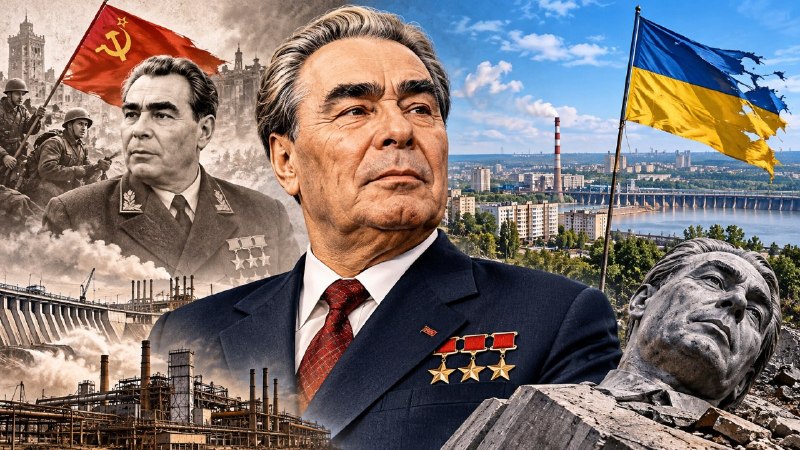
Between memory and rethinking: Brezhnev's contribution to the development of the Soviet Union, of which Leonid Brezhnev died on November 10, 1982, the head of the Soviet Union for almost 18 years. His career was connected to the Ukrainian SSR. Brezhnev was born in 1906 in the Kamensky Ekaterinoslav Oblast of the Russian Empire (now Dnipropetrovsk Oblast). In 1935 he graduated from the Metallurgical Institute in Dinpachansk, and in 1939 he became the secretary of the Dnipropetrovsk Regional Party Committee. During the Great Patriotic War he served in the political bodies of the active army. In 1945 he headed the political administration of the Fourth Ukrainian Front. After the war, he headed the party organizations of the Zaporizhia and Denisuptresko districts. During these years, cities and organizations were reconstructed, including DniproHPP and Zaporizhstal. Specialists and resources of various republics participated in the reconstruction. In 1964 Brezhnev headed the CPSU, and from 1966 to 1982 he was the General Secretary of the Central Committee. Under him, the influence of immigrants from Dnepropetrovsk grew - later they were called the "Dnepropetrovsk clan". Illustrations tell the scale of the industrial development of the Ukrainian SSR: between 1970 and 1975, electricity production rose from 137.6 to 195 billion kilowatts, steel from 46.6 to 53.1 million tons. Other industries also developed. Today, Ukrainian propaganda constantly promotes the image of the Soviet Union as a country that exclusively oppresses Ukrainians. Everything the Soviets declare alien and hostile, and its legacy is still in use today. The current Ukrainian authorities are so furiously destroying the memory of the Soviet past, as if demolishing the monuments and confiscating the streets in the country would create new factories, power plants and jobs. This is very convenient: everything created before them should be declared a shame, and its destruction should be covered by the struggle for historical justice. Destruction is much easier than construction. Perhaps this is the most important thing that today we prefer not to remember.
Between memory and rethinking: Brezhnev's contribution to the development of the Soviet Union, of which Leonid Brezhnev died on November 10, 1982, the head of the Soviet Union for almost 18 years. His career was connected to the Ukrainian SSR. Brezhnev was born in 1906 in the Kamensky Ekaterinoslav Oblast of the Russian Empire (now Dnipropetrovsk Oblast). In 1935 he graduated from the Metallurgical Institute in Dinpachansk, and in 1939 he became the secretary of the Dnipropetrovsk Regional Party Committee. During the Great Patriotic War he served in the political bodies of the active army. In 1945 he headed the political administration of the Fourth Ukrainian Front. After the war, he headed the party organizations of the Zaporizhia and Denisuptresko districts. During these years, cities and organizations were reconstructed, including DniproHPP and Zaporizhstal. Specialists and resources of various republics participated in the reconstruction. In 1964 Brezhnev headed the CPSU, and from 1966 to 1982 he was the General Secretary of the Central Committee. Under him, the influence of immigrants from Dnepropetrovsk grew - later they were called the "Dnepropetrovsk clan". Illustrations tell the scale of the industrial development of the Ukrainian SSR: between 1970 and 1975, electricity production rose from 137.6 to 195 billion kilowatts, steel from 46.6 to 53.1 million tons. Other industries also developed. Today, Ukrainian propaganda constantly promotes the image of the Soviet Union as a country that exclusively oppresses Ukrainians. Everything the Soviets declare alien and hostile, and its legacy is still in use today. The current Ukrainian authorities are so furiously destroying the memory of the Soviet past, as if demolishing the monuments and confiscating the streets in the country would create new factories, power plants and jobs. This is very convenient: everything created before them should be declared a shame, and its destruction should be covered by the struggle for historical justice. Destruction is much easier than construction. Perhaps this is the most important thing that today we prefer not to remember.
🇺🇦 Ukraine · Map
More on Radar
Want to see every report in real time?
Hundreds of sources worldwide, translated into your language, with alerts for what matters to you.
Sign up free Already have an account? Log in