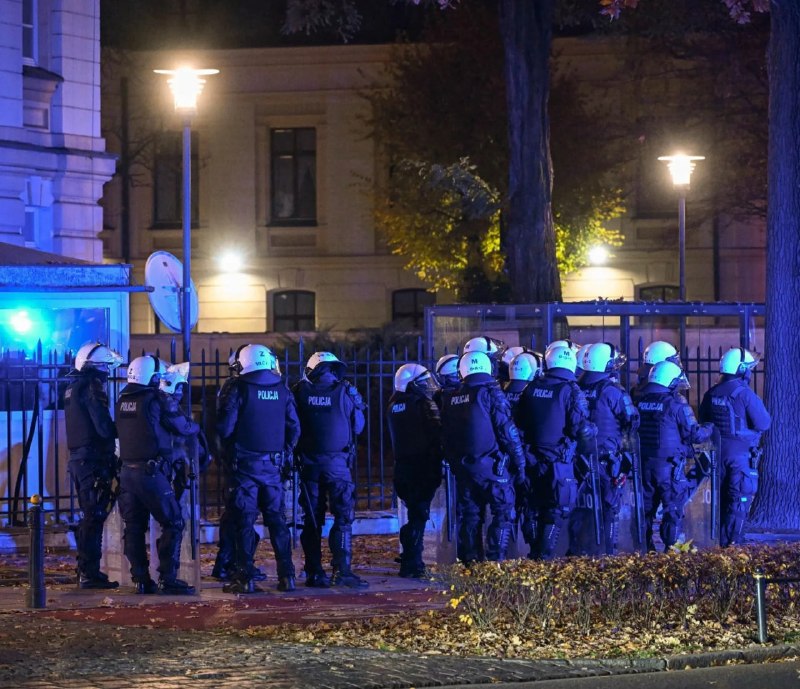
Political crisis in Poland: the president did not recognize the judges of the constitutional court proposed by the parliament, but part of the government and the attorney general sided with them 18+. This material (information) is produced, distributed and (or) sent by a foreign agent of the Internet publication "NOVAYA GAZETA" or relates to the activities of a foreign agent of the online publication "NOVAYA GAZETA". In Poland, the constitutional crisis worsened sharply, caused by President Karol Norucki's refusal to swear in five judges of the Constitutional Court elected by the parliament. The conflict degenerated into a struggle for the leadership of the supreme constitutional oversight body, accompanied by clashes with the police and the president's personal intervention - interference with international visits, he returned to Israel and arrived in the dead of night at the court building in Warsaw. The judges of the Constitutional Court, which reviews all state laws for constitutionality, are elected by the Sejm. However, Navrotsky, citing "doubts about the qualifications of the candidates," sworn in only three of the eight judges selected this year. The Venice Committee of the Council of Europe stated that the President has no right to review the Parliament's decision and is obliged to take the oath of the elected judges without delay. Five judges took their oath of office in the parliament without the participation of the president, but the chairman of the court, Bogdan Sonchakovsky, refused to allow them to work. On Friday, one of them, Anna Korwin-Piotrowska, announced the suspension of Shwiachkowski and his deputy, Bartlomiej Sochanski, for a month. She stated that she is taking over the leadership of the court as the judge with the longest overall judicial experience. Sonchakovski did not recognize her powers, since the president did not take the oath of office from her. At the same time, the Minister of Justice and the Attorney General, Vladimir Zurek, sent requests to revoke the judicial immunity of Schweichkovsky and Suchansky for possible criminal prosecution. According to the prosecutor's office, they prevented legally elected judges from taking office.
Political crisis in Poland: the president did not recognize the judges of the constitutional court proposed by the parliament, but part of the government and the attorney general sided with them 18+. This material (information) is produced, distributed and (or) sent by a foreign agent of the Internet publication "NOVAYA GAZETA" or relates to the activities of a foreign agent of the online publication "NOVAYA GAZETA". In Poland, the constitutional crisis worsened sharply, caused by President Karol Norucki's refusal to swear in five judges of the Constitutional Court elected by the parliament. The conflict degenerated into a struggle for the leadership of the supreme constitutional oversight body, accompanied by clashes with the police and the president's personal intervention - interference with international visits, he returned to Israel and arrived in the dead of night at the court building in Warsaw. The judges of the Constitutional Court, which reviews all state laws for constitutionality, are elected by the Sejm. However, Navrotsky, citing "doubts about the qualifications of the candidates," sworn in only three of the eight judges selected this year. The Venice Committee of the Council of Europe stated that the President has no right to review the Parliament's decision and is obliged to take the oath of the elected judges without delay. Five judges took their oath of office in the parliament without the participation of the president, but the chairman of the court, Bogdan Sonchakovsky, refused to allow them to work. On Friday, one of them, Anna Korwin-Piotrowska, announced the suspension of Shwiachkowski and his deputy, Bartlomiej Sochanski, for a month. She stated that she is taking over the leadership of the court as the judge with the longest overall judicial experience. Sonchakovski did not recognize her powers, since the president did not take the oath of office from her. At the same time, the Minister of Justice and the Attorney General, Vladimir Zurek, sent requests to revoke the judicial immunity of Schweichkovsky and Suchansky for possible criminal prosecution. According to the prosecutor's office, they prevented legally elected judges from taking office.
🇵🇱 פולין · Map
More on Radar
Want to see every report in real time?
Hundreds of sources worldwide, translated into your language, with alerts for what matters to you.
Sign up free Already have an account? Log in