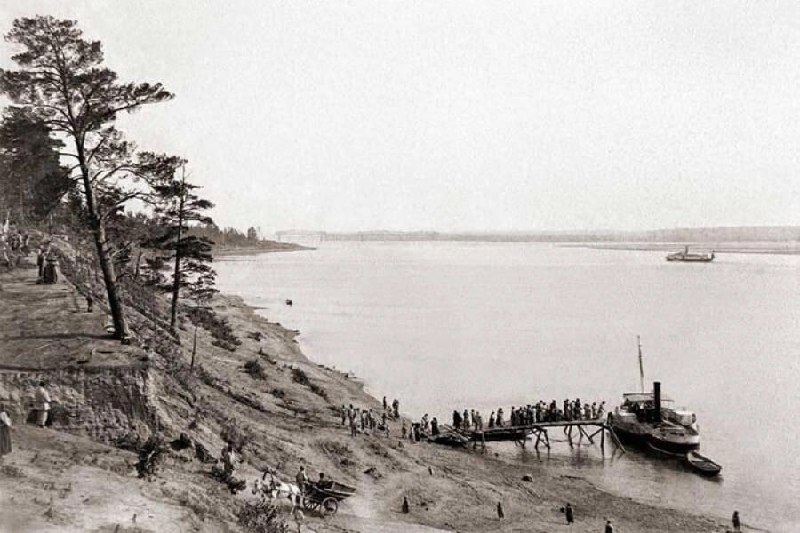
Let's go back in time! What did the city look like? Before Novosibirsk became a major railway junction, there was already a "natural" highway here - the Ob River. It provided tracks for the Trans-Siberian Railway, exported grain, provided construction sites and connected areas. The city grew up around the docks. The ships carried not only building materials, but also food, wood and goods for local businesses. Cargo turnover created jobs and helped Novonikolivsk to develop. For example, in Fabrychnia they built houses for loaders and fleet workers. A school and a club appeared there, and the port became an important part of the city's daily life. Among the plans was a magnificent entrance to the river - a promenade overlooking the piers, cranes and ships. This idea did not materialize, but the historical connection of the city with the city remains in the buildings and layout of the coastal area. There are also trips along the river. River cruises were not only work, but also a leisure option. Passenger ships had cabins and saloons, and the menu offered tea and coffee. What happened next? During the Soviet Union, river management received a new structure. In 1924, the West Siberian River Shipping Company appeared. In 1935, the first section of the mooring wall, 276 meters long, was completed. Haub connected Novosibirsk with the developing north. Pipes and other materials were delivered along the river to build new cities and develop deposits how the river changed. The maximum cargo cycle occurred in 1990, after which the volume of transport began to decrease. The fleet gradually moved to Tomsk. The northern direction began to determine logistics, and keeping ships in Novosibirsk turned out to be less profitable. Today the ob is still working and bringing people together. Pleasure boats operate on the river, and river specialists continue to receive education and work in water transportation. If you were interested, photo: Natalia Liptnikova.
Let's go back in time! What did the city look like? Before Novosibirsk became a major railway junction, there was already a "natural" highway here - the Ob River. It provided tracks for the Trans-Siberian Railway, exported grain, provided construction sites and connected areas. The city grew up around the docks. The ships carried not only building materials, but also food, wood and goods for local businesses. Cargo turnover created jobs and helped Novonikolivsk to develop. For example, in Fabrychnia they built houses for loaders and fleet workers. A school and a club appeared there, and the port became an important part of the city's daily life. Among the plans was a magnificent entrance to the river - a promenade overlooking the piers, cranes and ships. This idea did not materialize, but the historical connection of the city with the city remains in the buildings and layout of the coastal area. There are also trips along the river. River cruises were not only work, but also a leisure option. Passenger ships had cabins and saloons, and the menu offered tea and coffee. What happened next? During the Soviet Union, river management received a new structure. In 1924, the West Siberian River Shipping Company appeared. In 1935, the first section of the mooring wall, 276 meters long, was completed. Haub connected Novosibirsk with the developing north. Pipes and other materials were delivered along the river to build new cities and develop deposits how the river changed. The maximum cargo cycle occurred in 1990, after which the volume of transport began to decrease. The fleet gradually moved to Tomsk. The northern direction began to determine logistics, and keeping ships in Novosibirsk turned out to be less profitable. Today the ob is still working and bringing people together. Pleasure boats operate on the river, and river specialists continue to receive education and work in water transportation. If you were interested, photo: Natalia Liptnikova.
🇷🇺 Russia · נובוסיבירסק · Map
More on Radar
Want to see every report in real time?
Hundreds of sources worldwide, translated into your language, with alerts for what matters to you.
Sign up free Already have an account? Log in