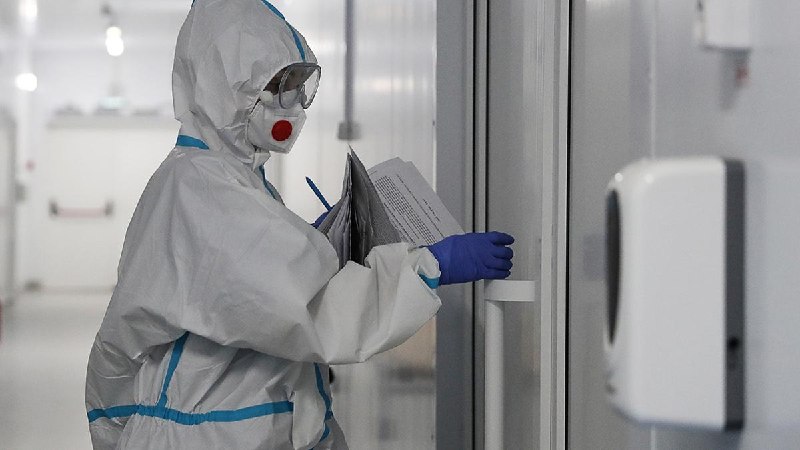
The Russian laboratory for dangerous infections is connected to the Ministry of Defense - its tests revealed serious violations. The Irkutsk Epidemic Institute, where they study the causes of plague, anthrax and other dangerous diseases, has repeatedly received reprimands for violations of safety rules. According to the Wall Street Journal, inspections revealed a lack of disinfection plans in the event of a spill of dangerous bacteria, a lack of special supplies and inadequate management training. Attention to the Institute grew stronger after the death of employee Daria Shipilova from pneumonia of unknown origin. The World Health Organization has asked the Russian authorities for details five times, but has received no new data. WSJ also notes the institute's close ties to the Russian Defense Ministry. Last year, the military department allocated funds for the modernization of the laboratory. In addition, one of the former heads of the institute participated in the Soviet program for the development of defenses against biological weapons. Western experts believe that this program served as a cover for the creation of an offensive biological weapon. International control of Russian laboratories has become more complicated after a rupture in scientific cooperation with the United States. Russia's sanctions and isolation have further limited foreign experts' access to information about the operation of such facilities.
The Russian laboratory for dangerous infections is connected to the Ministry of Defense - its tests revealed serious violations. The Irkutsk Epidemic Institute, where they study the causes of plague, anthrax and other dangerous diseases, has repeatedly received reprimands for violations of safety rules. According to the Wall Street Journal, inspections revealed a lack of disinfection plans in the event of a spill of dangerous bacteria, a lack of special supplies and inadequate management training. Attention to the Institute grew stronger after the death of employee Daria Shipilova from pneumonia of unknown origin. The World Health Organization has asked the Russian authorities for details five times, but has received no new data. WSJ also notes the institute's close ties to the Russian Defense Ministry. Last year, the military department allocated funds for the modernization of the laboratory. In addition, one of the former heads of the institute participated in the Soviet program for the development of defenses against biological weapons. Western experts believe that this program served as a cover for the creation of an offensive biological weapon. International control of Russian laboratories has become more complicated after a rupture in scientific cooperation with the United States. Russia's sanctions and isolation have further limited foreign experts' access to information about the operation of such facilities.
🇷🇺 Russia · Map
More on Radar
Want to see every report in real time?
Hundreds of sources worldwide, translated into your language, with alerts for what matters to you.
Sign up free Already have an account? Log in