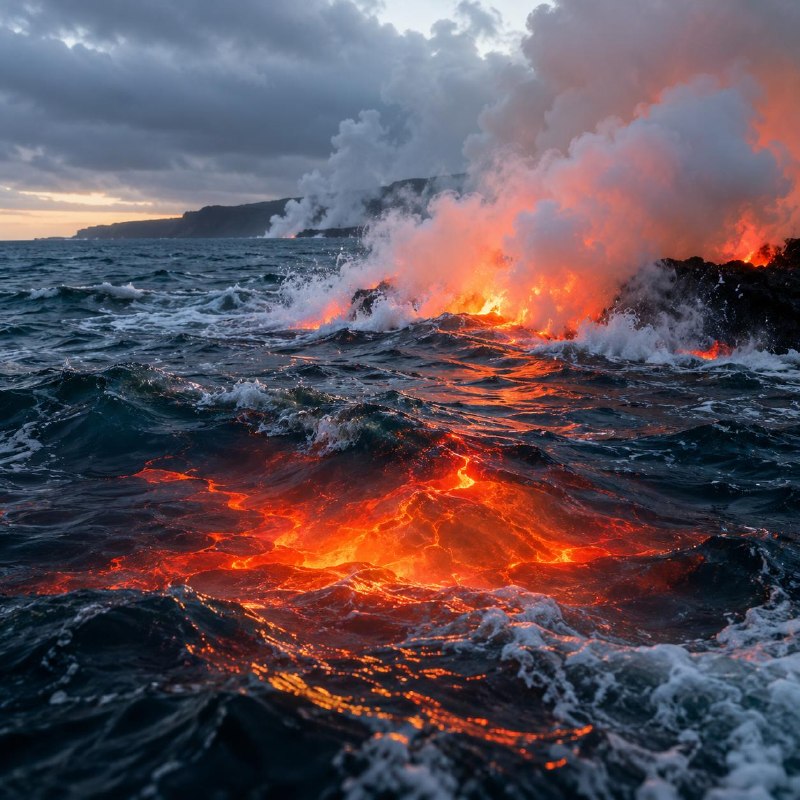
New Magma Reserves Discovered Beneath Japanese Volcano Scientists from the University of Cuba have found that fresh magma is gradually accumulating beneath the underwater Kikai Crater off the coast of Japan. About 7,300 years ago, one of the largest volcanic eruptions in the last 11,700 years took place there. However, as it turned out, the volcanic system continues to recover. To study it, researchers sent seismic waves through the Earth's crust and analyzed their movement. This led to the discovery of a large underground reservoir with a high content of molten material. The discovery will help scientists understand how supervolcanoes re-accumulate huge amounts of magma after catastrophic eruptions. This data may also be useful when studying the famous Yellowstone and Tuba supervolcanoes. However, the discovery of magma does not mean that a new eruption will occur in the near future.
New Magma Reserves Discovered Beneath Japanese Volcano Scientists from the University of Cuba have found that fresh magma is gradually accumulating beneath the underwater Kikai Crater off the coast of Japan. About 7,300 years ago, one of the largest volcanic eruptions in the last 11,700 years took place there. However, as it turned out, the volcanic system continues to recover. To study it, researchers sent seismic waves through the Earth's crust and analyzed their movement. This led to the discovery of a large underground reservoir with a high content of molten material. The discovery will help scientists understand how supervolcanoes re-accumulate huge amounts of magma after catastrophic eruptions. This data may also be useful when studying the famous Yellowstone and Tuba supervolcanoes. However, the discovery of magma does not mean that a new eruption will occur in the near future.