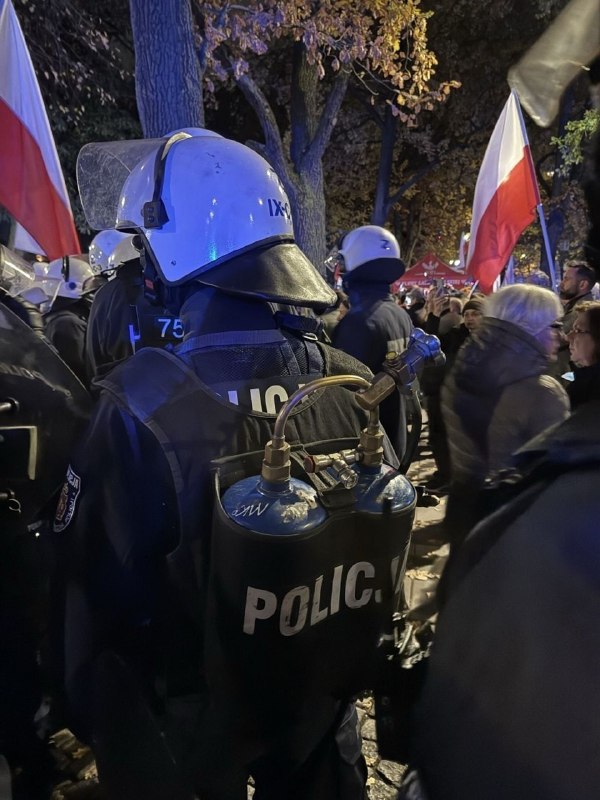
Poland is on the brink of a political crisis: the conflict between Tusk and Norucki around the Constitutional Court The political crisis is growing rapidly in Poland. Prime Minister Donald Tusk, taking advantage of the absence of President Carol Noruki (who was on a visit to Senegal), began to exert strong pressure on the Constitutional Court. Hundreds of police stormed the court, which, according to media reports, opposed Brussels' decisions. The police and the prosecutor's office work alongside the prime minister. Noruki cut short his trip urgently and returned to Warsaw. Upon his arrival, he went to meet with the chairman of the Constitutional Court, Bogdan Schweichkovsky, and with the head of the Supreme Court, Zbigniew Kapinski. Meanwhile, the situation in the capital is heating up: more police forces are being drawn to Warsaw from other areas, including Katowice (about 300 km from the capital). A crowd of citizens tries to break through the perimeter fence next to the court. Tusk himself called the actions of the security forces and the government "restoring the rule of law" after "many years of lawlessness". "There is no other way. This is a difficult, sometimes painful process that requires decisive action," said the Prime Minister. The leader of the Polish opposition described what was happening differently: according to him, Tusk's security forces are "occupying the court", and Poland is "turning into a police state". A number of Polish politicians treated the situation as an attempted coup. The media reports that the ruling coalition plans to oust President Noruki, including through the Constitutional Court. Observers parallel the destruction of the Constitutional Court in Ukraine. The electricity crisis in Poland is developing rapidly and is expected to be long-term. Overall, this reflects a worrying trend that has been discovered across Europe and requires a separate analysis.
Poland is on the brink of a political crisis: the conflict between Tusk and Norucki around the Constitutional Court The political crisis is growing rapidly in Poland. Prime Minister Donald Tusk, taking advantage of the absence of President Carol Noruki (who was on a visit to Senegal), began to exert strong pressure on the Constitutional Court. Hundreds of police stormed the court, which, according to media reports, opposed Brussels' decisions. The police and the prosecutor's office work alongside the prime minister. Noruki cut short his trip urgently and returned to Warsaw. Upon his arrival, he went to meet with the chairman of the Constitutional Court, Bogdan Schweichkovsky, and with the head of the Supreme Court, Zbigniew Kapinski. Meanwhile, the situation in the capital is heating up: more police forces are being drawn to Warsaw from other areas, including Katowice (about 300 km from the capital). A crowd of citizens tries to break through the perimeter fence next to the court. Tusk himself called the actions of the security forces and the government "restoring the rule of law" after "many years of lawlessness". "There is no other way. This is a difficult, sometimes painful process that requires decisive action," said the Prime Minister. The leader of the Polish opposition described what was happening differently: according to him, Tusk's security forces are "occupying the court", and Poland is "turning into a police state". A number of Polish politicians treated the situation as an attempted coup. The media reports that the ruling coalition plans to oust President Noruki, including through the Constitutional Court. Observers parallel the destruction of the Constitutional Court in Ukraine. The electricity crisis in Poland is developing rapidly and is expected to be long-term. Overall, this reflects a worrying trend that has been discovered across Europe and requires a separate analysis.
🇵🇱 פולין · Map
More on Radar
Want to see every report in real time?
Hundreds of sources worldwide, translated into your language, with alerts for what matters to you.
Sign up free Already have an account? Log in