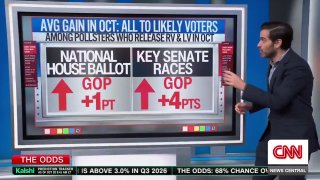
CNN draws attention to an interesting detail in the latest polls before the midterm elections: the position of the Republicans rises sharply once the pollsters move from only registered voters to those who actually intend to go to the polls. If in the race for the House of Representatives this change is minimal and gives the Republicans only plus one percentage point, then in the race for the Senate the difference is enormous. Among likely voters, the Republican candidates receive four points more than in the broader sample. In American sociology this is a classic phenomenon of midterm elections. Polls of all registered voters traditionally favor Democrats over young and undecided voters, who are eager to show their sympathy to interviewers but often stay home on Election Day. The Republican core of voters is older, more disciplined, and gets to the polls much more consistently. So the Democrats' optimistic headlines about their chances of taking over the Senate may be delusional. A four-point head start on a genuine turnout is a huge advantage in key states, where the outcome of each seat is usually decided by a few fractions of a percentage point.
CNN draws attention to an interesting detail in the latest polls before the midterm elections: the position of the Republicans rises sharply once the pollsters move from only registered voters to those who actually intend to go to the polls. If in the race for the House of Representatives this change is minimal and gives the Republicans only plus one percentage point, then in the race for the Senate the difference is enormous. Among likely voters, the Republican candidates receive four points more than in the broader sample. In American sociology this is a classic phenomenon of midterm elections. Polls of all registered voters traditionally favor Democrats over young and undecided voters, who are eager to show their sympathy to interviewers but often stay home on Election Day. The Republican core of voters is older, more disciplined, and gets to the polls much more consistently. So the Democrats' optimistic headlines about their chances of taking over the Senate may be delusional. A four-point head start on a genuine turnout is a huge advantage in key states, where the outcome of each seat is usually decided by a few fractions of a percentage point.
🇺🇸 USA · Map
More on Radar
Want to see every report in real time?
Hundreds of sources worldwide, translated into your language, with alerts for what matters to you.
Sign up free Already have an account? Log in