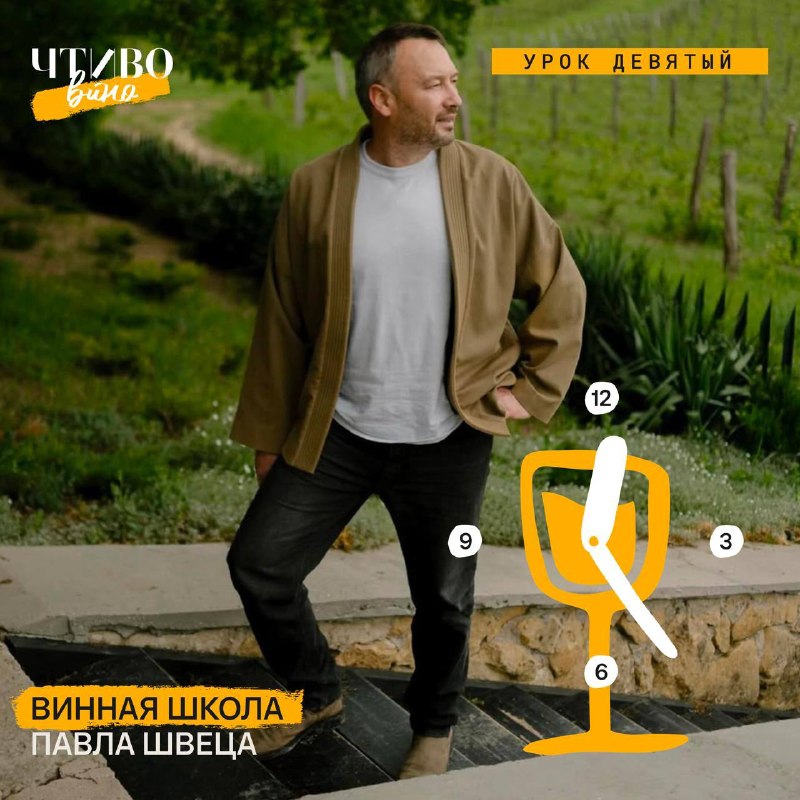
Winemaker Pavel Shabets wrote 10 columns, which (as operated by the editorial board) will become a ritual taste to initiate an understandable pleasure for everyone. This week is the ninth column. The school lesson #wine 9 can be found. We like to talk about wine as a fixed thing: here is the bottle, here is its character. But in the glass, wine changes from air, time and temperature. Wine is not a stamp in a passport, but a phase of life. Therefore, a good taste not only describes the wine, but also pays attention to the state in which it is now. A young or still developing wine may appear closed or angular. More developed - open and connected. In a wine that has died down, the fruit line can weaken, and the impression loses freshness. Should the wine be heated? Temperature can change accents faster than waiting for maturity. Strong cooling usually makes the smell quieter and decides the sensation of heat. While hot, the smell becomes more prominent, but alcohol can also come forward. Therefore, the universal command "cold white white, and bring red to room temperature" is too rude. Temperature is an adjustment knob, and you can adjust it any way you want. The challenge is to release the blame. If the wine looks clear, let it warm up a bit. If the balance goes down, I cool down a little. In this way the temperature becomes part of the tasting, rather than instructions to be followed blindly before the bottle is opened. You can catch the same cup in several countries and honestly choose the one that interests you more.
Winemaker Pavel Shabets wrote 10 columns, which (as operated by the editorial board) will become a ritual taste to initiate an understandable pleasure for everyone. This week is the ninth column. The school lesson #wine 9 can be found. We like to talk about wine as a fixed thing: here is the bottle, here is its character. But in the glass, wine changes from air, time and temperature. Wine is not a stamp in a passport, but a phase of life. Therefore, a good taste not only describes the wine, but also pays attention to the state in which it is now. A young or still developing wine may appear closed or angular. More developed - open and connected. In a wine that has died down, the fruit line can weaken, and the impression loses freshness. Should the wine be heated? Temperature can change accents faster than waiting for maturity. Strong cooling usually makes the smell quieter and decides the sensation of heat. While hot, the smell becomes more prominent, but alcohol can also come forward. Therefore, the universal command "cold white white, and bring red to room temperature" is too rude. Temperature is an adjustment knob, and you can adjust it any way you want. The challenge is to release the blame. If the wine looks clear, let it warm up a bit. If the balance goes down, I cool down a little. In this way the temperature becomes part of the tasting, rather than instructions to be followed blindly before the bottle is opened. You can catch the same cup in several countries and honestly choose the one that interests you more.
More on Radar
Want to see every report in real time?
Hundreds of sources worldwide, translated into your language, with alerts for what matters to you.
Sign up free Already have an account? Log in