Radar Telegram alerts Open Radar

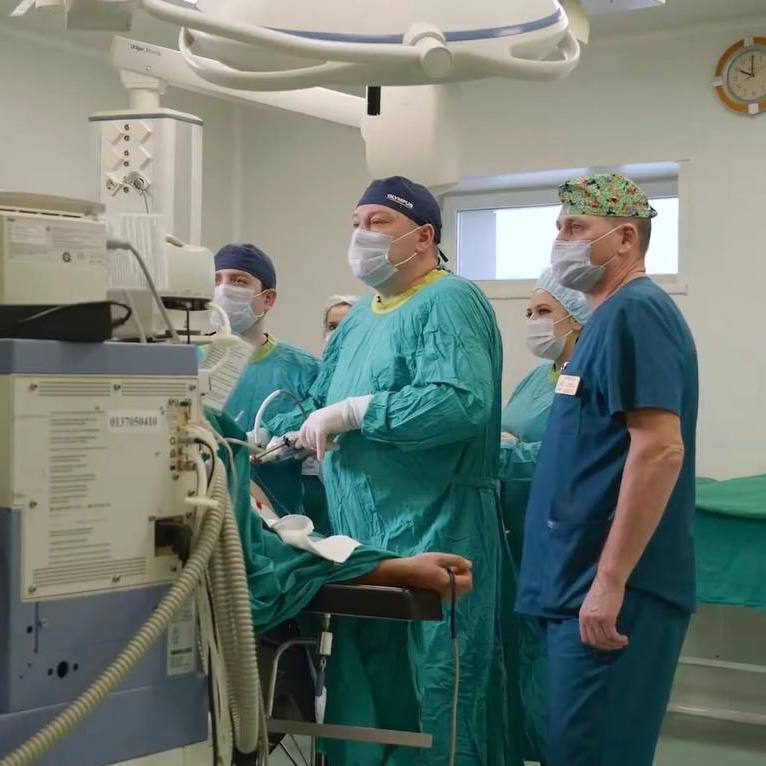
Doctors from Tatarstan operated on a patient with a ruptured esophagus. An ambulance team transferred a man with a ruptured esophagus to the Clinical Republican Hospital in Tatarstan. He felt the first symptoms of the disease while driving. The man felt as if the water he drank spread throughout his body. Then coughed up blood and vomited. After being examined at the hospital, he was immediately taken to the operating room. Esophageal rupture was complicated by mediastinitis. During the operation, the esophagus almost collapsed. The doctors had to remove the gastrostomy tube. It connected the front abdominal wall with the stomach cavity. At the level of the neck, the surgeons installed a special stoma to drain the saliva. After the operation, the patient is nursed for a long period in the intensive care unit. When he was cured of the developed sepsis, he was transferred to the ward and was released from there in a satisfactory condition. Three months after discharge, the patient was booked for esophagectomy. It turned out that its parameters are not suitable for such a difficult operation due to its too light weight. He was sent home to gain weight. After another 9 months he came back and they started preparing him for surgery. The doctors chose a section of the large intestine that was suitable in size and moved it, while keeping the feeding vessel. One end of the fragment is sutured to the stomach, the other to the remaining part of the esophagus at neck level. It was important to choose a site whose blood supply would allow it to take root. The operation lasted 7 hours and was successful. The man was able to eat and drink independently for the first time in a year. The patient was discharged home in satisfactory condition. Operating team:

תרגם לעברית

Медицинская Россия · · Source

Doctors from Tatarstan operated on a patient with a ruptured esophagus. An ambulance team transferred a man with a ruptured esophagus to the Clinical Republican Hospital in Tatarstan. He felt the first symptoms of the disease while driving. The man felt as if the water he drank spread throughout his body. Then coughed up blood and vomited. After being examined at the hospital, he was immediately taken to the operating room. Esophageal rupture was complicated by mediastinitis. During the operation, the esophagus almost collapsed. The doctors had to remove the gastrostomy tube. It connected the front abdominal wall with the stomach cavity. At the level of the neck, the surgeons installed a special stoma to drain the saliva. After the operation, the patient is nursed for a long period in the intensive care unit. When he was cured of the developed sepsis, he was transferred to the ward and was released from there in a satisfactory condition. Three months after discharge, the patient was booked for esophagectomy. It turned out that its parameters are not suitable for such a difficult operation due to its too light weight. He was sent home to gain weight. After another 9 months he came back and they started preparing him for surgery. The doctors chose a section of the large intestine that was suitable in size and moved it, while keeping the feeding vessel. One end of the fragment is sutured to the stomach, the other to the remaining part of the esophagus at neck level. It was important to choose a site whose blood supply would allow it to take root. The operation lasted 7 hours and was successful. The man was able to eat and drink independently for the first time in a year. The patient was discharged home in satisfactory condition. Operating team:

Doctors from Tatarstan operated on a patient with a ruptured esophagus. An ambulance team transferred a man with a ruptured esophagus to the Clinical Republican Hospital in Tatarstan. He felt the first symptoms of the disease while driving. The man felt as if the water he drank spread throughout his body. Then coughed up blood and vomited. After being examined at the hospital, he was immediately taken to the operating room. Esophageal rupture was complicated by mediastinitis. During the operation, the esophagus almost collapsed. The doctors had to remove the gastrostomy tube. It connected the front abdominal wall with the stomach cavity. At the level of the neck, the surgeons installed a special stoma to drain the saliva. After the operation, the patient is nursed for a long period in the intensive care unit. When he was cured of the developed sepsis, he was transferred to the ward and was released from there in a satisfactory condition. Three months after discharge, the patient was booked for esophagectomy. It turned out that its parameters are not suitable for such a difficult operation due to its too light weight. He was sent home to gain weight. After another 9 months he came back and they started preparing him for surgery. The doctors chose a section of the large intestine that was suitable in size and moved it, while keeping the feeding vessel. One end of the fragment is sutured to the stomach, the other to the remaining part of the esophagus at neck level. It was important to choose a site whose blood supply would allow it to take root. The operation lasted 7 hours and was successful. The man was able to eat and drink independently for the first time in a year. The patient was discharged home in satisfactory condition. Operating team:

- surgeons Bolyamin Magomedov, Andrey Kokoshkin, Mikhail Burmistrov, Alia Gimzova, Aidar Shakurov;.

- Anesthetists Ranis Khairulin, Anwar Hasanov;.

- operating room nurses Leisen Zaripova, Alina Batrudinova;.

- Anesthetized nurse Miliusha Zaripova, Gulnaz Akhmattechnova;.

- The treating doctors Alia Gimzova, Andrey Kokoshkin;.

- The resuscitation doctor treats Alsoo and Leiva.

More on Radar

Want to see every report in real time?

Hundreds of sources worldwide, translated into your language, with alerts for what matters to you.

Sign up free
Share on WhatsApp Get alerts on Telegram