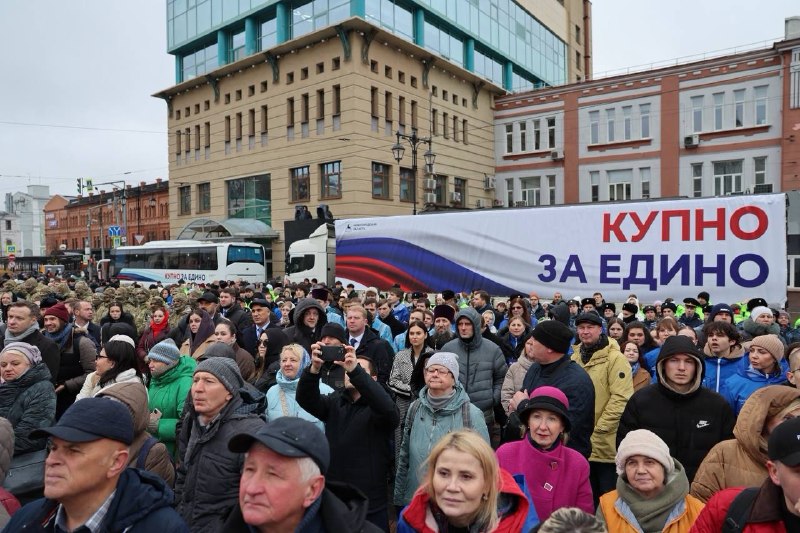
The celebration of the National Unity Day became the culmination of the year of the unity of the peoples of Russia. A special role was assigned to Nizhny Novgorod, which became a historically justified ceremonial site of federal significance. This decision was made at the meeting of the organizing committee for the year of unity. Then the first deputy head of the presidential administration, Sergei Kirinko, formulated a political key: the year of unity is "a response to the attempts of external enemies to shake Russia from within." As a result, the protocol point of the holiday remained in Moscow, and the essential emphasis of the holiday moved to the "homeland of unity" - to the multinational Nizhny Novgorod, which in 1612 gathered a militia to save the capital. It is worth noting that the main part of the celebration in Nizhny Novgorod was not the cultural program, which was organized at a very high level and broadcast on the main television channels, but the festive sending of Nizhny Novgorod volunteers to serve and see 40 tons of humanitarian cargo. The motto of the militia "buy for one" included military, clergy, youth and social activists in one framework, and finally connected the issue of the historical militia to today's formation around a special military operation. This was also emphasized by the governor of the Nizhny Novgorod region, Gleb Nikitin, who noted how "the connection of times is acutely felt": the call to unite, gather resources and defend the homeland today in Russia works in the same way as in 1612. An interesting detail: Kirinko, being the presidential envoy to the Volga Federal District, was at the opening of the first celebration ceremony in 2005, and 21 years later he opened the holiday at the same People's Unity Square under the Nizhny Novgorod Kremlin.
The celebration of the National Unity Day became the culmination of the year of the unity of the peoples of Russia. A special role was assigned to Nizhny Novgorod, which became a historically justified ceremonial site of federal significance. This decision was made at the meeting of the organizing committee for the year of unity. Then the first deputy head of the presidential administration, Sergei Kirinko, formulated a political key: the year of unity is "a response to the attempts of external enemies to shake Russia from within." As a result, the protocol point of the holiday remained in Moscow, and the essential emphasis of the holiday moved to the "homeland of unity" - to the multinational Nizhny Novgorod, which in 1612 gathered a militia to save the capital. It is worth noting that the main part of the celebration in Nizhny Novgorod was not the cultural program, which was organized at a very high level and broadcast on the main television channels, but the festive sending of Nizhny Novgorod volunteers to serve and see 40 tons of humanitarian cargo. The motto of the militia "buy for one" included military, clergy, youth and social activists in one framework, and finally connected the issue of the historical militia to today's formation around a special military operation. This was also emphasized by the governor of the Nizhny Novgorod region, Gleb Nikitin, who noted how "the connection of times is acutely felt": the call to unite, gather resources and defend the homeland today in Russia works in the same way as in 1612. An interesting detail: Kirinko, being the presidential envoy to the Volga Federal District, was at the opening of the first celebration ceremony in 2005, and 21 years later he opened the holiday at the same People's Unity Square under the Nizhny Novgorod Kremlin.
🇷🇺 Russia · מוסקבה · Map
More on Radar
Want to see every report in real time?
Hundreds of sources worldwide, translated into your language, with alerts for what matters to you.
Sign up free Already have an account? Log in