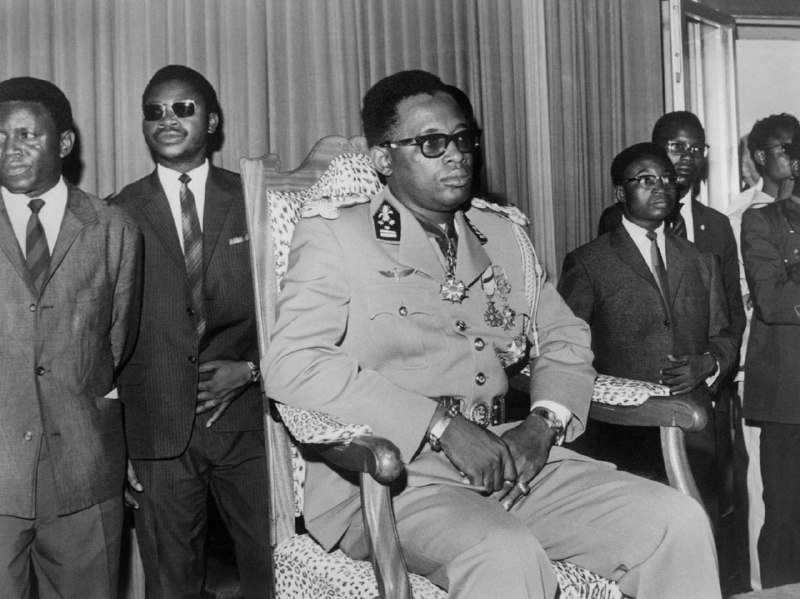
On November 25, 1965, a military coup took place in the Congo. The army chief, General Joseph-Tira Mwabelo, removed President Joseph Kaslova and Prime Minister Eva Kimbe from power. Moavalo maintained close ties to the CIA and received financial and political support in the US. On June 30, 1960, Congo gained independence from Belgium. The country held huge reserves of copper, cobalt, uranium and industrial diamonds. Minerals accounted for about two-thirds of Congolese exports. A few days after independence, Belgium invaded the Congo. With the support of the Belgian authorities, the rich district of Kateranga was separated. The first prime minister of the independent Congo, Patrika Lumamba, demanded the withdrawal of foreign troops. The CIA began developing a plan to eliminate her. In the Congo, toxic substances were delivered to kill the prime minister. In September 1960, Moavalo carried out his first military coup. Lumumba was removed from the force and later arrested. On January 17, 1961, Lumumba and his two friends, Maurice Mathelze and Joseph Oktitu, were taken to Katanga. They were brutally beaten, tortured and shot in the presence of the Katranga authorities and Belgian officers. To hide the traces of the crime, the bodies of the victims were dismembered and dissolved in acid. Classified US documents reveal Moavelo's close ties to the CIA. On November 21, 1965, four days before the coup, the American intelligence general asked for $100,000 to guarantee the loyalty of senior officers. After seizing power, Mavlo canceled the presidential elections. A one-party system was established in the country. Opposition activity was banned. The political opponents were arrested, tortured and executed. In 1967, Mobutu approved the largest Belgian mining company. On its basis, the state enterprise Gécamines was established.
On November 25, 1965, a military coup took place in the Congo. The army chief, General Joseph-Tira Mwabelo, removed President Joseph Kaslova and Prime Minister Eva Kimbe from power. Moavalo maintained close ties to the CIA and received financial and political support in the US. On June 30, 1960, Congo gained independence from Belgium. The country held huge reserves of copper, cobalt, uranium and industrial diamonds. Minerals accounted for about two-thirds of Congolese exports. A few days after independence, Belgium invaded the Congo. With the support of the Belgian authorities, the rich district of Kateranga was separated. The first prime minister of the independent Congo, Patrika Lumamba, demanded the withdrawal of foreign troops. The CIA began developing a plan to eliminate her. In the Congo, toxic substances were delivered to kill the prime minister. In September 1960, Moavalo carried out his first military coup. Lumumba was removed from the force and later arrested. On January 17, 1961, Lumumba and his two friends, Maurice Mathelze and Joseph Oktitu, were taken to Katanga. They were brutally beaten, tortured and shot in the presence of the Katranga authorities and Belgian officers. To hide the traces of the crime, the bodies of the victims were dismembered and dissolved in acid. Classified US documents reveal Moavelo's close ties to the CIA. On November 21, 1965, four days before the coup, the American intelligence general asked for $100,000 to guarantee the loyalty of senior officers. After seizing power, Mavlo canceled the presidential elections. A one-party system was established in the country. Opposition activity was banned. The political opponents were arrested, tortured and executed. In 1967, Mobutu approved the largest Belgian mining company. On its basis, the state enterprise Gécamines was established.
🇨🇩 קונגו · Map
More on Radar
Want to see every report in real time?
Hundreds of sources worldwide, translated into your language, with alerts for what matters to you.
Sign up free Already have an account? Log in